Chest Press Machines
A chest press machine is the most direct way to overload your pecs safely — no spotter needed, no barbell to balance, and no wasted energy stabilising the bar path.
The chest press machine works your pectoralis major (both upper and lower fibres depending on the angle), anterior deltoid, and triceps. Most machines let you adjust seat height to shift the emphasis — higher seat loads the lower chest; lower seat hits the upper fibres harder.
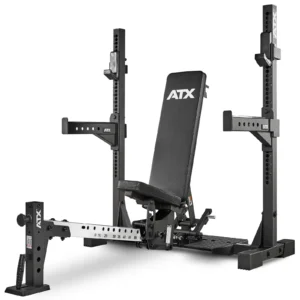
The ATX® Lever Arm Multi-Press covers flat, incline, decline, and shoulder press in one machine. The lever arms mimic a natural pressing arc — closer to free weights than a Smith machine — and the start/stop bar prevents the weight from pinning you. Four machines in one.
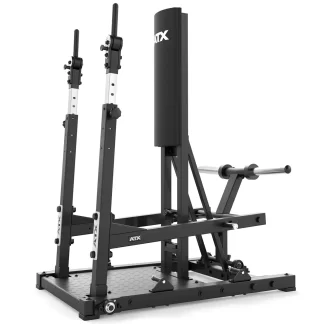
For a fixed-path option, the ATX® Standing Chest Press and seated chest press setups are ideal for commercial environments, rehab contexts, or anyone who wants consistent form without thinking about stability.
Flat vs. Incline vs. Decline — What’s the difference?
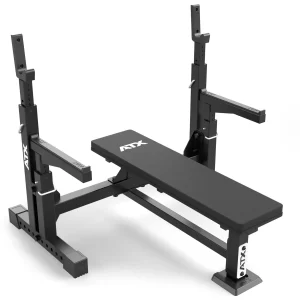
- Flat chest press machine: hits mid-chest mass, the workhorse movement
- Incline chest press machine: targets upper pecs and front delts — the area most people lack
- Decline chest press machine: lower pec emphasis, reduces shoulder stress for people with joint issues
If you can only choose one, a machine that covers flat and incline is the better investment.
Shoulder Press Machines
A dedicated shoulder press machine removes the lower back and core stability demands from overhead pressing — your delts do more work, and you can push heavier without form breakdown.
The seated shoulder press machine works the anterior and medial deltoid, upper trapezius, and triceps. Compared to a dumbbell shoulder press, the machine path lets you push to failure without worrying about a weight dropping on you — useful if you train alone.
The lever arms on our ATX machines double as a station for shrugs, upright rows, and prone rows. Set them to the lowest position and you have a full upper body machine, not just a shoulder press.
Machine shoulder press vs. Smith machine shoulder press:
A dedicated shoulder press machine uses a converging or fixed lever arm path designed around the shoulder joint. A Smith machine uses a straight vertical or angled bar — useful, but the fixed path can create shoulder impingement for some people. If you have the space for one purpose-built machine, the lever arm design wins.
Chest Fly & Pec Deck Machines
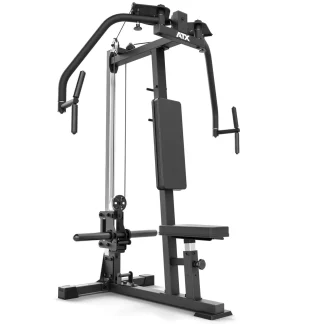
A chest fly machine isolates the pecs through a squeezing movement that a press cannot replicate. If full chest development is the goal — especially the inner chest — it is non-negotiable.
The pec deck chest fly machine targets the sternal head of the pectoralis major at the peak contraction point. Unlike cable fly variations, the machine keeps tension consistent throughout the entire range of motion. That constant tension is what separates machine chest flyes from most alternatives.