Smith Machines
Showing 21–21 of 21 results

Showing 21–21 of 21 results
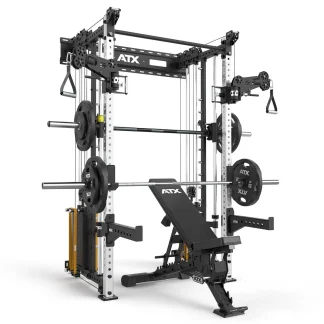
A smith machine is a guided barbell training system that lets you perform squats, bench press, shoulder press, hip thrusts, deadlifts, and other compound movements with a fixed bar path. Unlike a free barbell, the bar is attached to vertical or angled rails, so you can train safely without a spotter — making a smith machine for home your gym one of the most practical investments you can make in your training setup.
Not all smith machines are built the same. The most important spec to check first is the smith machine bar weight. Standard bars typically weigh between 6–20 kg, but many models use a counterbalanced bar that feels lighter than a traditional Olympic barbell — useful if you’re training around an injury or introducing beginners to barbell movements.
Next, consider the rail angle. Vertical rails keep the bar path straight up and down; angled rails (usually 7–12°) mimic a more natural pressing motion. Both are effective — the right choice depends on your primary exercises. If squatting is your focus, an angled rail is generally preferred.
Finally, decide whether you want a standalone unit or an integrated rack. Several models in our range combine a smith machine with cables, giving you access to lat pulldowns, cable rows, face pulls, and tricep pushdowns from a single piece of equipment — a significant space and cost saving for any home gym.
Short on floor space? A wall-mounted Smith rack with cables keeps the floor clear while adding Smith and cable training in one setup.
A smith machine covers most major muscle groups. Here are the most common movements:
Free weights recruit more stabiliser muscles because you’re responsible for controlling the bar path in three dimensions. A smith machine removes that variable – the bar moves on a fixed plane, which reduces stabiliser demand but allows you to overload the primary muscles with more weight and less technical risk.
For most home gym lifters, this is a practical advantage, not a drawback. If you’re training alone, pushing close to failure without a rack or spotter carries real injury risk with free weights. The smith machine’s safety catches eliminate that entirely. Many experienced lifters use both – free barbells for competition-specific movements, and the smith machine for hypertrophy work and accessory training.
We stock models suited to every budget — from compact, standalone smith machines starting under $900, through to commercial smith machines built for daily heavy use.
| Model / Type | Footprint | Integrated Cables | Commercial Certification | Lat Pulldown Option | Best for |
| ATX-MPX-500 | 123/189x86cm | ✗ | Domestic | ✗ | Compact gyms |
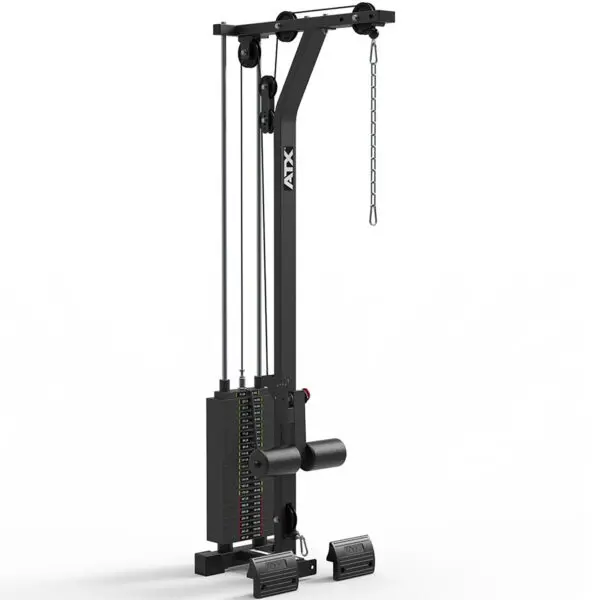
| ATX-MPX-620 | 121/203 x 111cm | ✗ | Domestic | ✓ | Smith & Half Rack combo |
| ATX-PRX-640-MPO | 120/188 cm x 142 cm | ✗ | Domestic | ✓ |
Lifters wanting rack + smith versatility
|
| IM2000 | 185x125cm | ✓ | N/A | ✗ | Small Space, Full Body Workouts |
| ATX-SRX-650 | 157 cm x 120/199 cm | ✓ | Studio | ✓ | Home gym, full-body training |
| ATX-PSR-780 | 180 cm x 129.5 cm | ✗ | Studio | ✗ | Gyms, studios, daily heavy use |