 Are Kettlebells Good for Weight Loss?
 Are Kettlebells Good for Weight Loss?
 Yes — kettlebells are one of the most effective tools for weight loss. A 20-minute kettlebell workout can burn anywhere from 400 to 600 calories, including calories burned anaerobically. That’s a serious return on a short time investment.
Beyond the raw calorie burn, there’s strong anecdotal and clinical evidence that kettlebell exercises combined with solid eating habits can help people lose weight, reduce body fat, and improve overall quality of life. Whether the goal is fat loss, building lean muscle, or just moving better, a kettlebell workout for weight loss ticks a lot of boxes.
Get Leaner with Kettlebells
A typical gym session might involve 30 minutes on the treadmill and another 30 minutes lifting weights to burn a few hundred calories. But what if the same results could be achieved in almost half the time? That’s exactly what kettlebell exercises offer.
A 20-minute kettlebell session gets the heart rate up and burns roughly 20 calories per minute. To put that in perspective, that’s equivalent to running uphill at a fast pace or covering a mile (1.6 km) in six minutes. Burning that many calories with kettlebells in a short window means faster fat loss without the risk of overtraining.
Build Strength and Muscle with Kettlebells
Aside from weight loss, a 2010 study showed that kettlebells may also help improve muscular strength, mobility and endurance. When you swing or carry a kettlebell, your body moves against the weighted resistance of the kettlebell. Your body will try to overcome this resistance by burning calories for energy and making your muscles work harder.
Progressive Overload with Kettlebells
Progressive overload is one of the most reliable methods for getting stronger and building muscle. The concept is simple: gradually increase the stress placed on the muscles over time. A 2014 study confirmed that this approach leads to bigger muscle size and improved strength.
When lifting a kettlebell, the resistance creates small tears in the muscle fibres. The body repairs these tears and adapts by growing stronger and adding new protein strands to the muscle. Over time, this means greater muscle mass and muscular strength — and more muscle means a higher resting metabolic rate, which supports long-term fat loss.
The bottom line: the harder the kettlebell exercise, the leaner and stronger the body will get. Start with a manageable weight, nail the form, and then step up to a heavier kettlebell when it starts feeling easy.
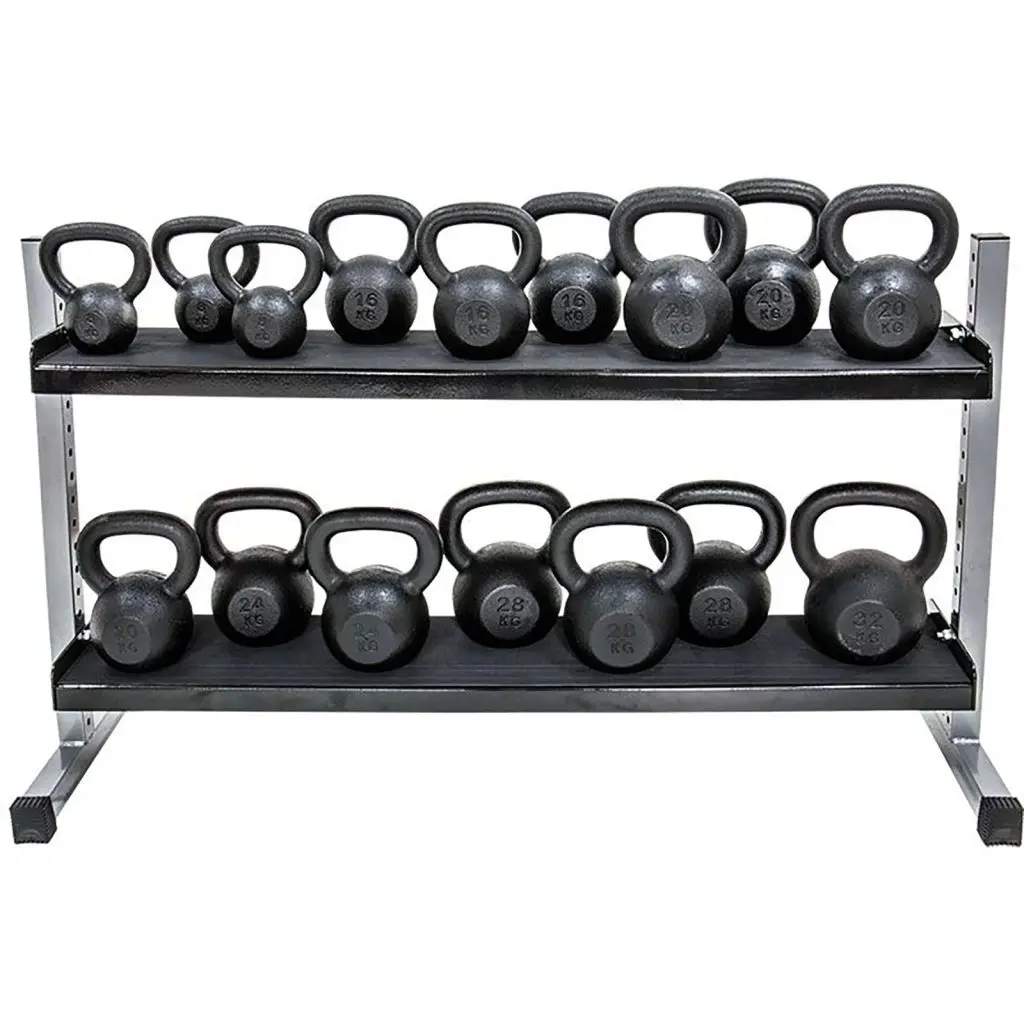
What Kettlebell Weight Should You Start With?
Every trainer will have a different opinion on starting weight, and the right answer depends on experience level, body weight, and which exercise is being performed. The table below provides general guidelines based on research and common coaching recommendations.
| Exercise | Women (Beginner) | Men (Beginner) | Experienced Trainee |
| Two-Handed Swing | 8 kg | 16 kg | 20–24 kg |
| Goblet Squat | 8 kg | 12–16 kg | 20–24 kg |
| One-Handed Snatch | 8 kg | 16 kg | 20–24 kg |
| Windmill | 6–8 kg | 10–12 kg | 16–20 kg |
For a two-handed kettlebell swing, research suggests that a 10-minute session at these weights can improve cardiovascular fitness and burn around 375 calories. The swing is a full-body exercise that works the back, shoulders, hamstrings, and quads. Simply pick up the kettlebell from a squat position, swing it between the legs, and drive it up to chest height.
Some experienced trainees may find 16 kg a bit light for swings, but remember — kettlebell training is different from isolation exercises like bicep curls. The momentum and control required make even moderate weights challenging.
For a one-handed kettlebell snatch, the same starting weights apply (8 kg for women, 16 kg for men). The snatch recruits the calves, thighs, hips, shoulders, and arms, making it a true full-body movement that demands coordination across the upper and lower body.
Starting with the recommended weights helps maintain proper form and reduces injury risk. If 10 reps with a 10 kg kettlebell feel too difficult, drop to a lighter weight. If the current weight feels effortless, go heavier. The goal is to find a weight that challenges the muscles without compromising technique.
10-Minute Kettlebell Workout for Weight Loss
This quick kettlebell workout is designed to burn up to 200 calories in 10 minutes. Perform each exercise for 2 minutes before moving to the next. Always consult a personal trainer before starting any new kettlebell workout program, especially for beginners.
Two-Handed Kettlebell Swing
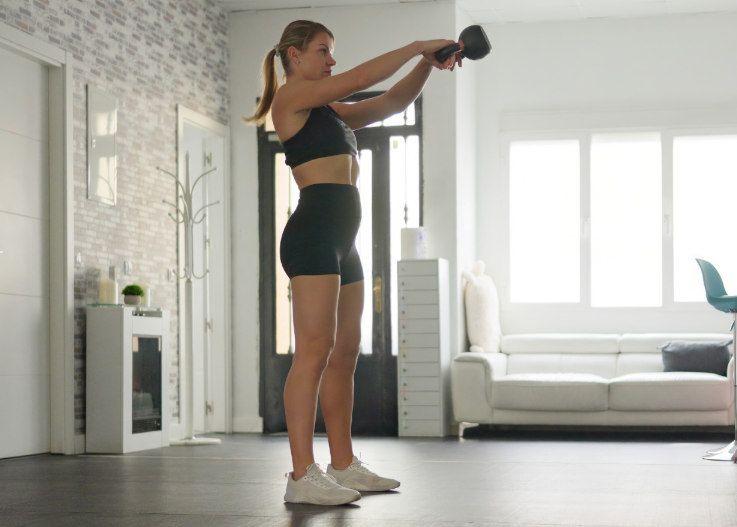
Muscles worked: shoulders, core, hips, hamstrings, and glutes
- Stand with feet slightly wider than shoulder-width apart.
- Drop into a squat position.
- Reach down and wrap both hands around the kettlebell handle.
- Drive through the heels, hamstrings, and glutes to lift the kettlebell off the floor. Swing it backwards between the legs and then forward up to chest height.
- Continue the swinging motion for 35 seconds.
- Rest for 25 seconds.
- Return to starting position and repeat.
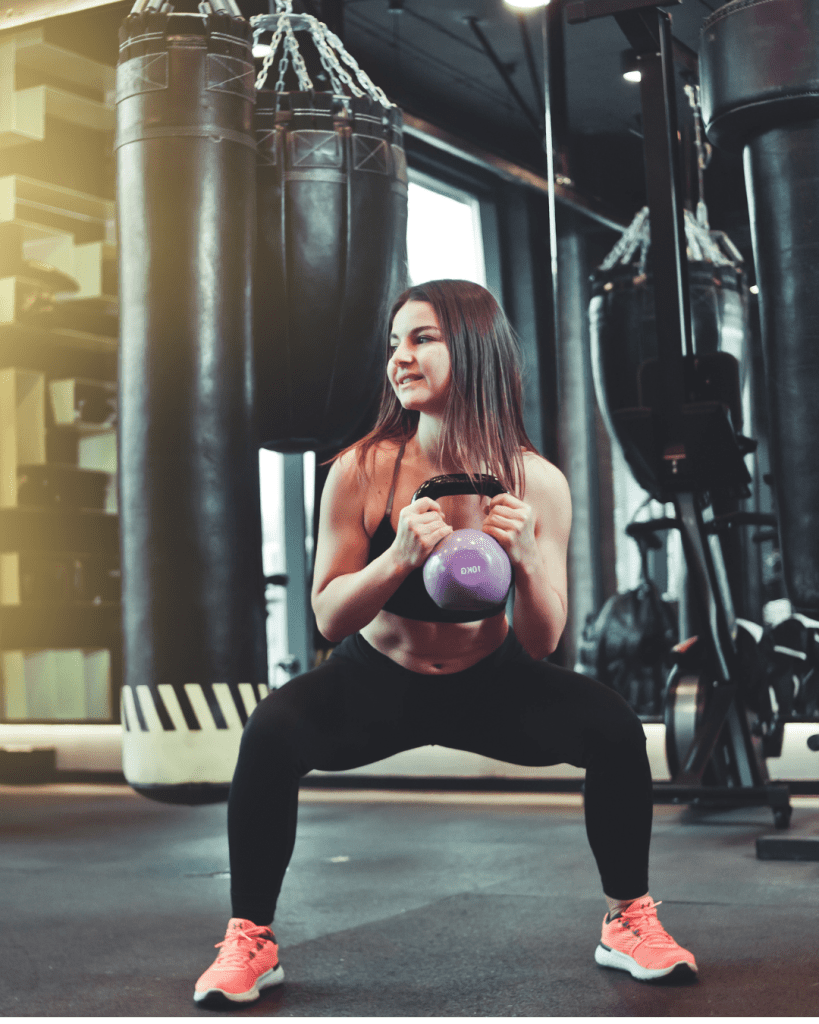
Kettlebell Goblet Squat
Muscles worked: quads, back muscles, anterior core
- Stand straight with a neutral spine.
- Hold the kettlebell handle close to the chest.
- Place feet slightly wider than hip-width apart. Look straight ahead.
- Take a deep breath, push the hips back, and bend the knees to lower into a squat.
- Keep the core tight throughout the movement.
- Breathe out and use the elbows to push the knees wider apart as you stand.
- Return to the starting position and repeat.
Kettlebell Windmill
Muscles worked: hips, core, shoulders, quads, and hamstrings
- Stand with feet shoulder-width apart.
- Grab the kettlebell in the right hand.
- Raise the right hand overhead and rest the left arm by the side or behind the back.
- Shift the right hip to a 45-degree angle to distribute roughly 70% of weight on the back leg and 30% on the front leg.
- Push the hip under the kettlebell out to the side. Bend the left knee slightly and keep the right leg straight.
- Slide the left arm down the thigh and lower the body toward the floor while keeping the right arm with the kettlebell locked out overhead.
- Return to the starting position and switch sides.
Kettlebell exercises can absolutely help with weight loss. For best results, aim for a kettlebell training routine of two to three sessions per week, focus on proper form, and use the right weight for each exercise. As strength improves, progress to a heavier kettlebell to keep challenging the muscles and driving fat loss.
Frequently asked Questions
A 20-minute kettlebell workout can burn between 400 and 600 calories, depending on intensity, weight used, and fitness level. That’s roughly 20 calories per minute, which is comparable to running at a fast pace.
Kettlebells tend to be more effective for fat loss because most kettlebell exercises are dynamic, full-body movements that elevate heart rate more than traditional dumbbell exercises. However, both tools have their place in a well-rounded training program.
Kettlebell swings are one of the best exercises for overall fat loss, including belly fat. They engage the core, glutes, hamstrings, and shoulders simultaneously, creating a high calorie burn. Paired with a calorie deficit, regular kettlebell swings can contribute to reducing body fat across the entire body.
A common recommendation is 75 to 150 kettlebell swings per session, done in sets of 10–25 reps with short rest periods. Two to three sessions per week is sufficient for most people looking to lose weight with kettlebells.
For women, an 8 kg kettlebell is a solid starting point. For men, 16 kg is the standard recommendation for most exercises. Start lighter if needed — proper form always comes before heavier weight.
Sources:
Schnettler, C., Porcari, J.P., Foster, C. and Anders, M. (2010) ‘Exclusive ACE research examines the fitness benefits of kettlebells’, ACE FitnessMatters, January/February, pp. 6–10. Available at: https://www.acefitness.org/getfit/studies/kettlebells012010.pdf