Bodyweight
Showing 21–23 of 23 results
Bodyweight training equipment lets you build real strength using your own body as the resistance. Our range covers everything you need for serious bodyweight training at home or in the gym — from chin up bars and wall-mounted dip stations to hyperextension benches, glute ham developers, suspension trainers, and ab straps. No stacked weight required — just you, the equipment, and gravity.
Sam’s Fitness has stocked professional bodyweight gym equipment since 2004. All products are held in Australian stock and ship from our Sydney warehouse
Bodyweight training uses your own body mass as resistance to build strength, muscle, and endurance — one of the most effective and accessible training methods available, used by military and emergency services worldwide and increasingly popular in home gyms because it requires minimal equipment and floor space.
The right equipment depends on your training goals. Below is a straightforward guide to the most common goals and the equipment that directly supports them:
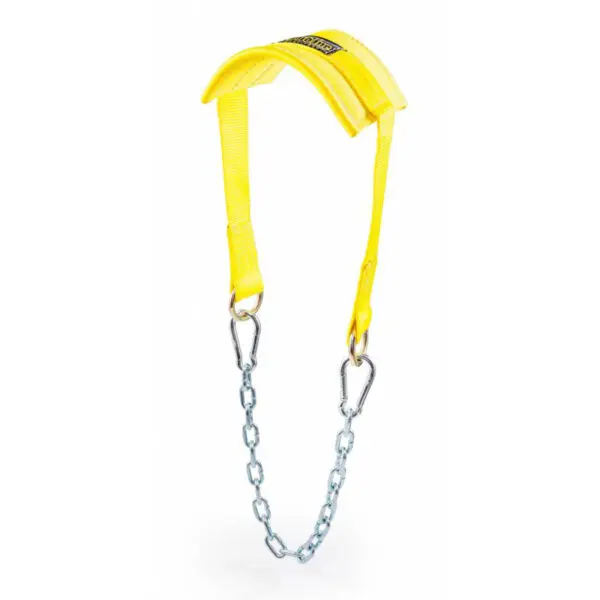
Once bodyweight reps become easy, a dip belt is the simplest progression — it hangs plates between your legs during chin-ups and dips, enabling progressive overload identical to barbell training. For hyperextensions and glute ham raises, hold a weight plate to the chest. Resistance bands anchored to the bar add tension at the top of each rep for an alternative loading method. Bodyweight strength training with added load is genuinely competitive with barbell training for upper body hypertrophy — it’s not a compromise approach.

In general, chin-up bars are very safe and can hold lots of weight. However, the style of chin-ups and pull-ups you’ll be doing will determine the type of chin-up bar that will be safest for you. Some common training styles and the best chin up bar to start with would be:
Basic bodyweight sets and reps: Any type – Doorway Pullup Bar, Wall, Rack or Freestanding Chin up Bar.
Explosive Chin-ups/Pullups, Muscle-ups: Wall or Rack Mounted Chin up Bar.
Weighted Chin-ups/Pullups: Wall, Rack Mounted or Freestanding Pull-up Bar.
Your bodyweight and height will also determine which chin-up bar is best for you. Just make sure that the chin up bar you purchase has a high enough weight capacity for your current and future training goals, as well as having the option to adjust the height of the bar, if needed.
High enough to hang at full arm extension without feet touching the floor — for most adults, at least 230–250 cm from the floor to the bar. If ceiling height is limited, a compact or folding wall-mounted unit can reduce the required clearance. Check each product’s specifications for the minimum installation height.
YES. According to Arnold, and to us, the Chin-up/Pull-up is the ultimate upper body exercise, working your lats, traps, rear delts, biceps, forearms, core, and stabilisers. Chin ups, performed on the chin-up bar, can be progressed infinitely. Meaning you will find a use for this bar throughout your training career. No matter how huge and strong you get.
For example, once you can do 10 pullups, you can add weights to a dip belt to make the chin-ups harder, or focus on different bodyweight progressions, such as Archer Pullups and L-sit Chin-ups. The possibilities are endless, as are the gains!
A chin up bar supports: chin-ups (underhand grip — back and biceps), pull-ups (overhand grip — back and lats), neutral-grip pull-ups, wide-grip pull-ups, hanging leg raises, knee tucks, L-sits, toes-to-bar, and dead hangs. With ab straps: hanging ab exercises. With a dip belt: loaded progressions beyond bodyweight.
Here’s a few options for those who want to do dips without a set of dip bars:
1. Chairs – you can do dips between a set of sturdy chairs you have at home, if they are heavy enough to not fall over or break under load. Make you sure you thoroughly test your rig first. Don’t dive straight into 70kg weighted dips first!
2. Kitchen countertop – get between the triangle corner gap in your kitchen and bang out some reps while cooking.
3. Park/Playground – there’s usually plenty of playground equipment, such as a bridge, that can mimic parallel bars. Some parks also have dedicated calisthenics equipment, including in-ground dip bars!
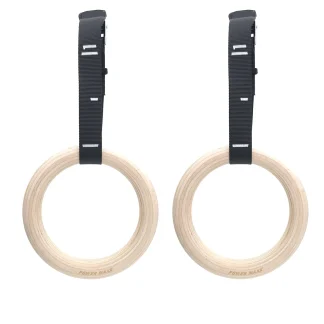
4. Rings – a harder variation, but by hanging a pair of gymnastics rings from a chin-up bar, cross beam, branch or anything solid enough – you can do ring dips!
Not necessarily, they are just different! Both the angled bar dip and the straight bar dip work your chest, shoulders, and triceps very well. However, the angled bar dip focuses a bit more on your chest, and the parallel dip focuses more on your shoulders and triceps. This is just due to the position of your hands when performing these movements, and the way your body is angled.
If you’re wondering whether to do angled bar dips or parallel bar dips, the answer.. is both! Both will work the same muscles, in a different way. If you only want to pick one, just do which ever you enjoy more, can feel in the muscles more, or you can perform with the equipment you have available.
Dip bars support: chest dips (body leaning forward, wide grip), tricep dips (body upright, narrow grip), L-sit holds, bodyweight rows (if bars are low enough to lie underneath), Bulgarian split squats, and push-up variations. Low-mounted wall dip stations also allow inverted row and suspension-style exercises.
Dip bar width depends on your personal preferences and body structure. In general, you want your hands to be directly under your shoulders, or about shoulder width apart when doing dips. You can bring your hands in closer or wider than shoulder width. Just experiment and see what works for you!
The triangle shaped dip bars you normally see in gyms, or a pair of portable dip bars, are great to experiment with, as you can adjust the width of your hands very easily to find what position works for you! Just be safe and try to pick a width that you can achieve a full range of motion with.
The space between your gymnastics rings depends on your current level of strength. Having the rings closer together will generally make the exercise easier, and having the rings further apart will generally make exercises, such as dips and pullups, much harder.
Just like holding a dumbbell out in front of you with straight arms, versus with bent arms. The further away the weight is from our centre of mass, the more difficult it becomes to lift. The further apart the rings are, the more difficult it becomes to pull up or dip yourself down. This is because your hands will be further from your centreline.
In general, a good width recommendation would be from the tip of your middle finger to your elbow. Put your forearm horizontally between the rings and adjust them to this width. Try this width and see how that goes to begin with. Make the necessary adjustments according to your own biomechanics and strength level.
The chin-up (and its variants: pull-ups, neutral-grip pull-ups) is consistently cited as the best upper body bodyweight exercise for home gyms — it trains the back, biceps, and core simultaneously, requires only a chin up bar, and scales from beginner (with resistance band assistance) to advanced (with a dip belt for added weight). For lower body and posterior chain, the glute ham raise on a GHD is in a similar category — unmatched for hamstring development without a barbell. If you can only choose one piece of equipment, a wall-mounted chin up bar delivers the broadest return.
Yes. Bodyweight training builds significant muscle when it includes progressive overload — the same principle that drives barbell training. The most effective approach: start with bodyweight reps, then add load via a dip belt for chin-ups and dips, a weight plate held to the chest for hyperextensions, and resistance bands for variable tension. Elite gymnasts build substantial upper body muscle exclusively through bodyweight methods. The equipment required — a chin up bar, dip station, and dip belt — is minimal and fits any home gym.
No! While static exercises can DEFINITELY build muscle and strength, there are many examples of people online who have built muscle on a basic training program (e.g., 3×8-12 per exercises). This was achieved using only basic bodyweight exercises such as pullups, push ups, dips and handstand push ups.
Static exercises, such as L-sits, Front Levers, and Planches are just another form of training you have the option to do. It would be the same as preferring to use dumbbells over barbells – you can use both, and both will help you gain muscle and strength. However you don’t have to use them if you don’t want to! Just focus on having fun and progressing with your training.
Grip orientation is the key difference. Chin-ups use a supinated (underhand, palms facing toward you) grip, which increases bicep involvement. Pull-ups use a pronated (overhand, palms facing away) grip, which places more load on the lats and is generally considered harder. Both exercises train the back, biceps, and core — the same chin up bar supports both movements. Neutral-grip pull-ups (palms facing each other) are a third variant that many people find easier on the wrists and elbows.