
Featured Products
Kettlebells
Most department-store kettlebells chip on the first drop, tear up your hands, and wobble on the floor. We stock kettlebells because we use them — and we only carry gear that holds up to real programming.
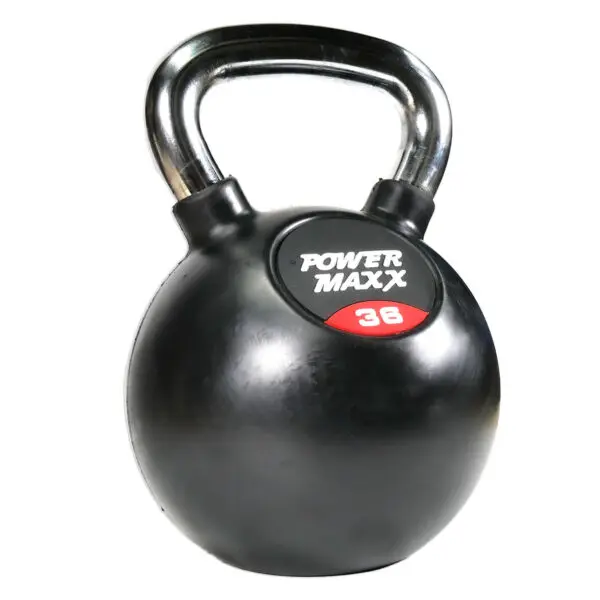
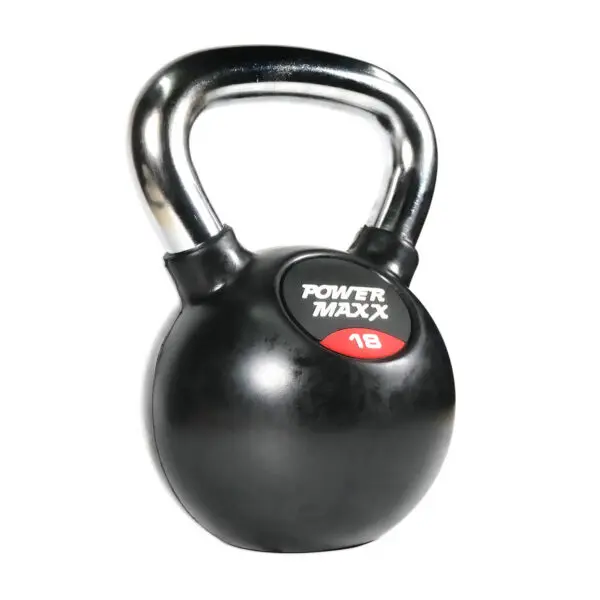
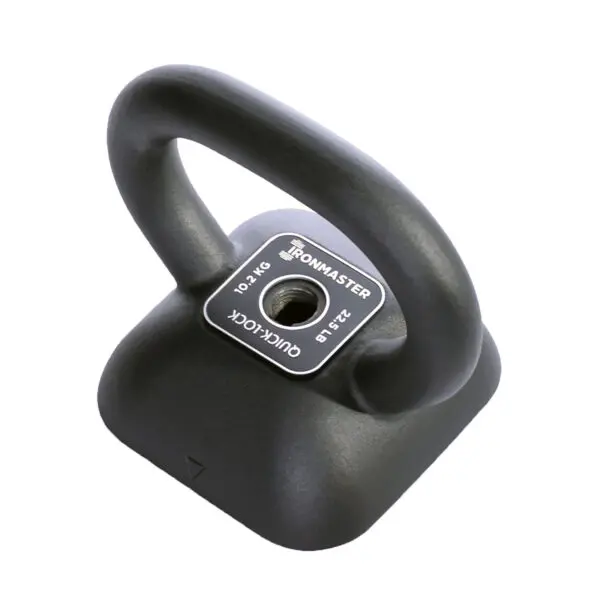
Every bell in our range features a chrome or steel handle that stays smooth under high-rep sets and chalk, with rubber-coated cast iron shells that protect your floors without sacrificing balance or feel. We carry two trusted ranges: Power Maxx kettlebells for outstanding value across standard weights, and the Ironmaster Adjustable Kettlebell for a full rack’s worth of resistance in a single unit. Here is a guide to starting kettlebell training.
Benefits
- Value for money
- High-quality materials
- Built to last
- Ergonomic design
- Compact & functional
Choosing the Right Kettlebell
Adjustable vs Fixed-Weight Kettlebell
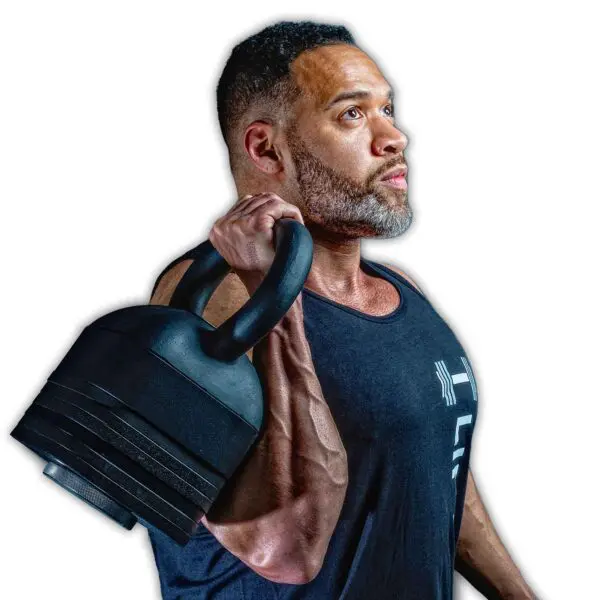
An adjustable kettlebell like the Ironmaster replaces an entire set by letting you swap internal plates in seconds — ideal for home gyms with limited space.
A fixed-weight kettlebell has no mechanism and nothing to adjust. Fastest transitions, zero compromise on feel. The standard for commercial gyms.
What Weight to Start With
- Complete beginners: 8kg (women) / 12kg (men)
- Some gym experience, new to kettlebells: 12kg (women) / 16kg (men) — the 16kg is the most popular starting weight for men in Australia
- Experienced lifters: 16–20kg (women) / 24–32kg (men)
- Advanced / kettlebell sport: 24kg+ (women) / 32kg+ (men)
Who Trains with Kettlebells?
Kettlebells aren’t niche equipment anymore. We sell them to powerlifters who use them for conditioning, CrossFit athletes who need them for competition , personal trainers setting up studios, and people building their first home gym who want one piece of equipment that does everything.
A single kettlebell and two square metres of floor space is enough for a full-body session — swings, goblet squats, presses, rows, Turkish get-ups, and snatches cover every major movement pattern. That combination of versatility and small footprint is why kettlebells are the most common first purchase for home gym owners in Australia.
If you’re building a home gym on a budget, a pair of kettlebells (one moderate, one heavy) plus a pull-up bar covers more ground than most people realise.
Frequently Asked Questions

 What weight kettlebell should I start with?
For most beginners: men start with 12kg or 16kg, women start with 8kg or 12kg. The classic Russian recommendation is 16kg for men and 8kg for women, but if you’re new to kettlebell training start lighter — kettlebell technique is more important than weight, and a too-heavy bell will reinforce bad form. Once you can clean and press the starter weight comfortably for 5+ reps, jump up by 4-8kg.
Cast iron vs competition kettlebell — what is the difference?
Cast iron kettlebells are single-piece moulded iron, usually powder-coated black. The size of the bell increases with weight — a 32kg bell is much bigger than a 16kg. Competition kettlebells are hollow steel, identical size and shape regardless of weight (just different colours and internal mass), with a uniform 35mm handle. For beginners and general fitness: cast iron is cheaper and durable. For serious kettlebell sport athletes: competition style — the standardised feel matters when chasing technique.
Are kettlebells better than dumbbells for fat loss?
They’re different tools for different jobs. Kettlebell swings, snatches, and complexes elevate heart rate while building strength — making them more time-efficient for fat loss workouts. Dumbbells are better for traditional hypertrophy and isolation work. The honest answer: the best tool is the one you’ll actually use. Many home gyms have both — a single 16kg or 20kg kettlebell for conditioning workouts, plus a dumbbell set for strength work.
What kettlebell weights are most popular for home gyms?
Most popular Sam’s Fitness kettlebell sales: men buy 16kg + 24kg + 32kg (covers warm-up, working, and heavy progression). Women buy 8kg + 12kg + 16kg. Couples often share, so we recommend 8/12/16/20/24/32kg as a complete household set. Power Maxx and ATX both offer kettlebells in 4kg increments. Buy 3 sizes — small, medium, heavy — rather than 6 close-together weights.
Do kettlebells need a special floor or can I drop them?
Modern kettlebells (especially cast iron) are designed to be dropped on appropriate flooring — rubber gym tiles, horse-stall mats, or a dedicated lifting platform. Drop on tile, timber, or thin carpet and you’ll either crack the floor or chip the kettlebell coating. For garage gyms we recommend 20mm rubber tiles minimum. Drop carefully even on rubber — the impact transfers through the floor and your downstairs neighbours will hate you.
Can Kettlebells build Muscle?
Yes. Any form of progressive weight training, where we work the muscle to, or close to, failure, will build muscle. Providing you have adequate nutrition, rest, and recovery. You can perform a lot of the same muscle building exercises with kettlebells that you can with barbells and dumbbells. For example squats, lunges, overhead press, triceps extensions, rows and even bicep curls!
The novel stimulus from kettlebells may also be what you need to break out of a muscle building plateau, if you haven’t seen any results in your current routine.
How many Kettlebells do I need?
This will depend on your goals and plans for kettlebell training. If for example, you just wanted to add some kettlebell swings to your workout. Initially you might only need one kettlebell.
However, if you plan on moving to a complete kettlebell program you are going to need more. For a beginner you would need something like 8kg, 12kg, 16kg and 20kg. As you progress you can get heavier kettlebells. Or double up on the ones that you already have for two handed movements.
What are the Benefits of Kettlebells?
- Explosiveness. Kettlebells are a fantastic way to add explosive movements into your training. While a dumbbell is weighted equally on each side of the handle, a kettlebell’s weight is distributed under the handle, changing its entre of mass. This means that kettlebells are much easier to swing and thrust using momentum. Plus they are also much easier to control as the weight is closer to your body, compared a dumbbell or barbell. This opens the door for a variety of unique exercises, such as Kettlebell swings, KB Clean and presses, and KB Squat Jumps.
- Multi-functional. Kettlebells can be used for a variety of training styles, including strength training, circuit training, and injury prevention. For example, the unique handle design makes them fantastic for Heavy Farmer’s Carries (great for building core, forearm, and back muscles). If you flip the kettlebell upside down, the kettlebell becomes very unstable, which is great for training your stabilisers. Kettlebells are also fantastic for weighted flexibility training, making it much easier to add weight to the stretch compared to loading individual weight plates onto yourself.
- Variety. Kettlebells are fun! They are not essential, but like anything in life, it’s good to try new things and find what works for you. You may find that Kettlebell rows work your lats much better than dumbbell rows, for example. You may prefer kettlebell swings and explosive leg training over traditional dumbbell Romanian deadlifts. Kettlebells are just another fun training tool you can add to our arsenal!