 Are Leg Presses Bad for Your Knees? How to Lift Safely
No, leg presses are not bad for your knees. The key is to maintain the proper form and use the proper weight.
Can Leg Presses Cause Knee Pain?
The invention of the leg press created a division in the fitness community that still exists to this day. On one side, you have loyal leg press users who point out that this leg machine reduces your risk for a knee injury owing to the strict form it requires from its users. On the other side, you have trainers claiming that this particular resistance equipment can lead to muscle imbalances.
It comes as no surprise then, that beginner-level trainers approach leg presses with equal amounts of apprehension and curiosity. How can one piece gym equipment stir so much controversy, you ask? Well, it all boils down to conflicting perspectives and different user experiences.
Proper Leg Press Form to Protect Your Knees
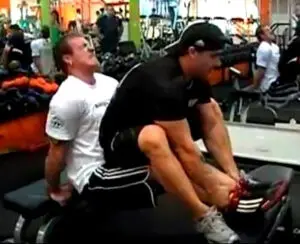
Before you start loading up the machine, make sure your body is in the right position:
- Head and back should be flat and fully supported by the padded seat. Don’t crane your neck forward or let your lower back round off the pad.
- Feet should be planted flat on the footplate, roughly hip-width apart, in the middle of the plate.
- Knees should track in line with your toes throughout the entire movement — never caving inward or flaring outward.
- Range of motion — lower your legs until your knees form roughly a 90-degree angle, then press back up.
- Buttocks should stay flat on the seat. If your hips are lifting, the weight is too heavy or you’re going too deep for your current mobility.
The single most important rule: never lock your knees out at the top of the movement. When you fully extend your legs, you shift the load from your muscles onto the knee joint itself. Always keep a slight bend at the top, tense your quads, and control the descent. This keeps tension on the muscle and protects the joint.

How Much Weight Should You Leg Press?
A common question for beginners is, “How much weight is already on a leg press machine?” Most standard 45-degree sleds have a starting weight (unloaded) of about 30kg to 45kg. While it is tempting to stack as many plates as possible, the most common cause of knee pain isn’t the machine itself—it’s “ego lifting.”
When you load the sled beyond your actual capacity, your form is the first thing to break. If you find yourself shaking, lifting your lower back off the pad, or needing to use your hands to push your knees, the weight is too heavy. For optimal quad growth and joint safety, choose a weight that allows you to complete 10–15 controlled repetitions with a full range of motion. If space is a constraint, a compact leg press option can be a good fit for home gyms. Check its starting resistance and dimensions before buying.
The Role of Foot Placement
According to bodybuilding legend Lee Priest, your positioning should ultimately depend on your specific anatomy and what feels most comfortable for your joints. However, you can adjust your stance to target different muscle groups:
- For Hamstrings and Glutes: If you want to engage your “hammies” and glutes more effectively, place your feet higher up on the plate.
- For Inner Legs: To target the inner thighs, try a wider stance with your feet turned out slightly—similar to a “duck stance.” As you press, focus on squeezing the inner part of the legs while maintaining constant tension throughout the rep.
- Narrow vs. Wide: Some trainers prefer a narrow stance for quad focus, while others find a wider stance more natural for their hip mechanics.
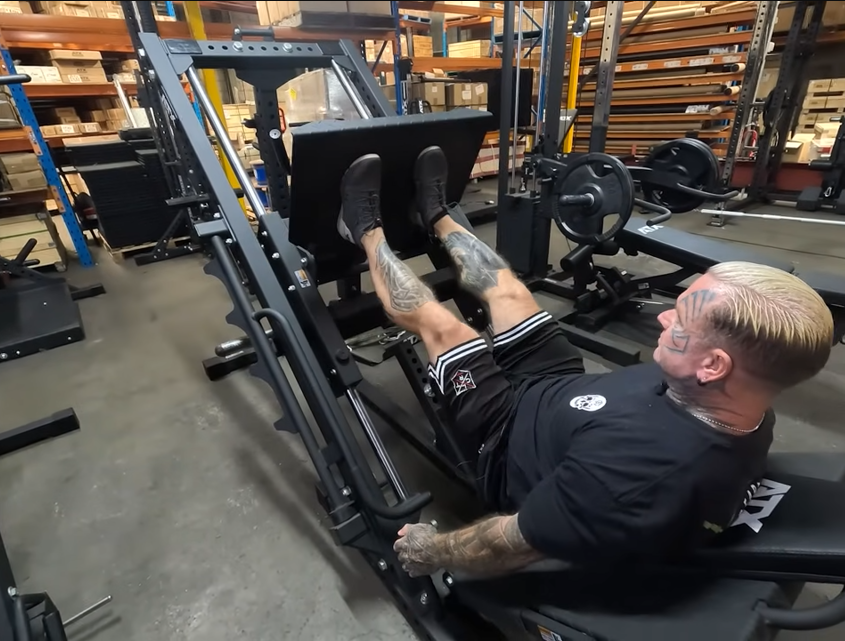
No Lock-Outs
This point is important enough to repeat. When you extend your legs fully — to the point where they become completely straight — you transfer the load from your muscles to your knee joints. This dramatically increases injury risk, particularly under heavy loads.
Always stop just short of full extension. Keep a slight bend in the knees at the top of each rep, squeeze your quads, and lower the weight under control. It’s a small adjustment that makes a significant difference to the health of your knees over time.
Three Tips on How to Use a Leg Press Machine Safely
1. Start with a weight you can handle The gym can be a competitive environment, and it’s tempting to load the leg press the way you’ve seen others do it. Resist that urge. Using a manageable weight is not only safer — it’s also more effective for quad development, since the quads respond better to controlled reps than to ego-driven maximal loads.
2. Warm up first Even if you’re experienced with heavy leg pressing, always start with lighter warm-up sets to prepare your joints and muscles for the heavier work ahead. This improves performance and significantly reduces injury risk.
3. Use a full range of motion Pressing with a full range of motion — bringing your knees close to your chest before extending — activates more muscle and produces better results than partial reps. If you can’t achieve a full range of motion with your current weight, reduce the load. Don’t sacrifice depth for the sake of adding more plates.
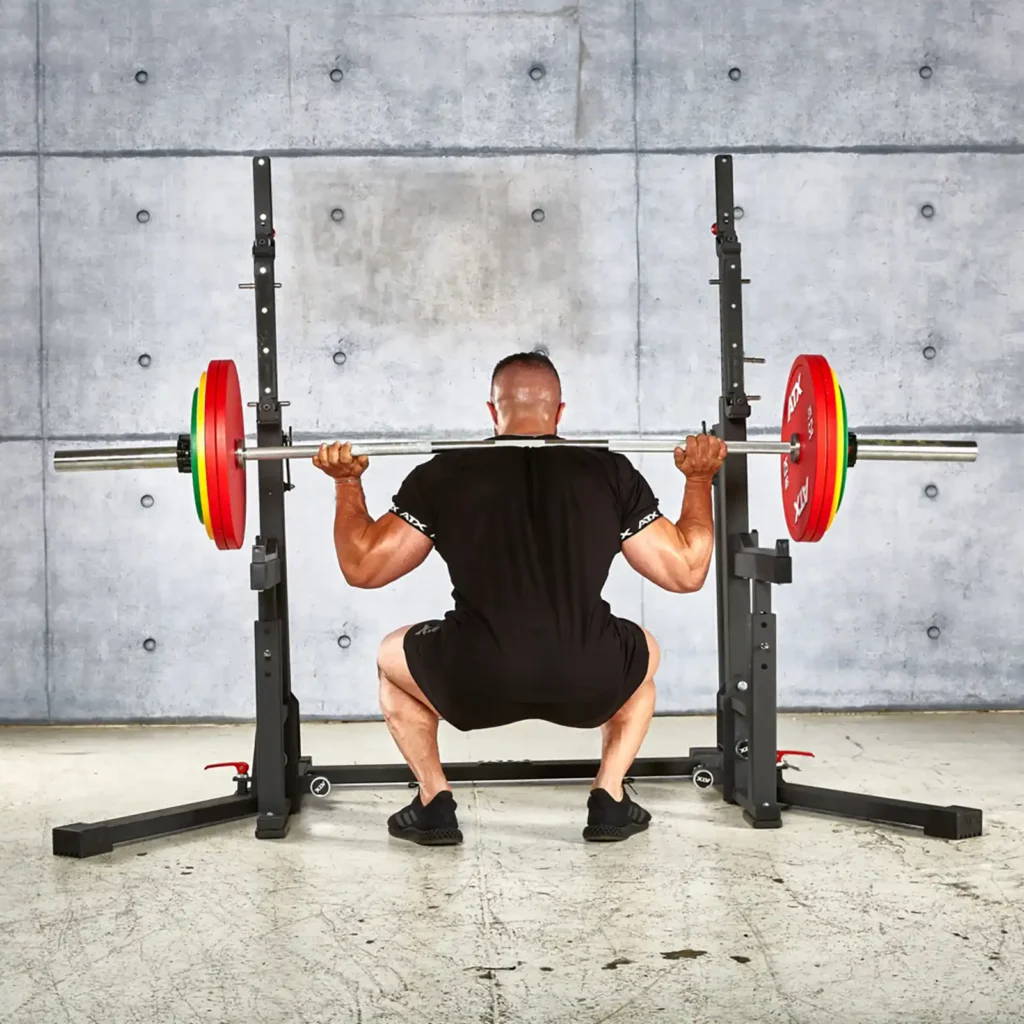
Leg Press vs Squats – Which is better?
The truth is that both exercises have genuine value, and the best approach for most people is to include both.
Where squats have the edge Squats are a full-body compound movement that trains your legs, core, and back simultaneously. They develop balance, coordination, and functional strength that carries over to everyday life and athletic performance. The squat also demands more total muscle activation, which means a greater stimulus for overall muscle growth.
Where the leg press has the edge The leg press allows you to train your legs hard with significantly less demand on your lower back, core, and stabilising muscles. This makes it valuable for people returning from injury, those with lower back issues, or anyone who struggles with squat mobility. It also allows for greater quad isolation and is easier to load progressively for beginners who haven’t yet developed their squat technique.
For your knees specifically Both exercises are safe for your knees when done correctly. The leg press can actually be easier on the knees than squats for some people because the machine controls the movement path. However, the leg press also makes it easy to overload — which is exactly where knee problems tend to develop.
The verdict Use squats as your primary lower-body movement for overall strength and athleticism. Use the leg press as a supplementary exercise to add training volume and target the quads with less spinal load. If you can only choose one, squats offer more overall benefit.
Frequently asked questions
No, quality leg presses (with good reviews) are not inherently bad for your knees. Problems arise when you use too much weight, place your feet too low on the plate, or lock out your knees at full extension. Use proper form with a manageable weight and the leg press is a safe, effective exercise.
For most people, a mid-to-high foot placement with feet hip-width apart is the safest and most balanced starting point. High placement reduces knee stress and increases glute and hamstring activation. Low placement increases knee stress and is best avoided by beginners
The leg press and squats are not identical, squats train more muscles and develop functional strength the leg press doesn’t fully replicate. That said, the leg press is a legitimate alternative for people who can’t squat due to injury, mobility limitations, or lower back issues.
Start lighter than you think you need to. Use a weight that allows you to complete your full range of motion with control, keeping your back flat and your knees tracking correctly throughout. Increase the load gradually over time.
Knee pain during the leg press is usually caused by feet placed too low on the plate, too much weight, or knees caving inward during the movement. Check your foot position first, reduce the weight if needed, and make sure your knees track in line with your toes.
About Sam’s Fitness
Sam’s Fitness supplies high-quality gym and fitness equipment from leading American and European brands to home gym owners, personal trainers, studios, and commercial gyms across Australia. Browse our full range of leg machines to find the right option for your setup.”