 Bodyweight Squats: Benefits, Proper Form & Variations
Chicken legs are the bane of the bodybuilding world. Far too many blokes flaunt their muscle-bound torsos only to reveal a puny set of legs underneath. Sure, genetics come into play, but most of the time these blokes simply haven’t made the effort to develop their lower body. What a shame.
Let’s be honest here: leg training is not for the faint of heart. Barbell squats, leg presses, calf raises, lunges, lying leg curls, and leg extensions in the same training session is gruelling, to say the least.
But if you want to get a leg up (no pun intended) in your lower body training, bodyweight squats can help get you on the right track. They’re simple, effective, and require zero equipment. Better yet, they’ll help you pack on muscle mass in your legs — whether you’re training at home or warming up before a heavy session.
This guide breaks down everything about the bodyweight squat exercise: muscles worked, proper form, benefits, variations, and how to keep progressing when they start feeling easy.
What Are Bodyweight Squats?
A bodyweight squat (also called an air squat) is a compound lower-body exercise where you lower your hips from a standing position until your thighs are at or below parallel, then stand back up — using only your own body weight as resistance. No barbell, no dumbbells, no machines.
It’s one of the most fundamental movement patterns in strength training and everyday life. You squat every time you sit down, pick something up off the floor, or play sport. Mastering the bodyweight squat builds the foundation for every weighted squat variation that follows.
Muscles Worked During Bodyweight Squats
Understanding which muscles fire during a bodyweight squat helps you get the most from each rep.
| Muscle Group | Role |
|---|---|
| Quadriceps | Primary mover — extends the knee as you drive up from the bottom position |
| Glutes (gluteus maximus) | Primary mover — extends the hip, especially in the deeper range |
| Hamstrings | Stabiliser — assists hip extension and controls the descent |
| Core (abdominals & erectors) | Stabiliser — keeps your torso upright and spine neutral |
| Calves (gastrocnemius & soleus) | Stabiliser — maintains ankle stability throughout the movement |
| Hip adductors | Stabiliser — controls knee tracking and inward collapse |
Benefits of Bodyweight Squats
Bodyweight squats punch well above their weight when it comes to training benefits. Here’s what they bring to the table.
Strengthen Your Hips and Lower Back
Sitting at a desk for eight hours a day can wreck your hips and lower back. Prolonged sitting weakens the hip flexors and creates a compression effect that leads to tightness in the back muscles. Regular bodyweight squats help rectify this by opening the hips and strengthening the surrounding musculature.Build Anterior Core Strength
Build Anterior Core Strength
Bodyweight squats activate your deep abdominal muscles, which helps ward off low back pain. Some studies even suggest they’re superior to sit-ups and crunches for core activation. That’s something worth thinking about.
Increase Ankle Mobility
Your ankle loses some of its mobility after you sprain it. Fitness experts call this condition chronic ankle instability, which makes you prone to recurrent sprains and chronic foot pain. When you perform bodyweight squats consistently, you increase your ankle mobility and lower the possibility of these foot issues happening. If you’re into team sports such as rugby, Aussie rules football, and basketball, that’s a major plus.
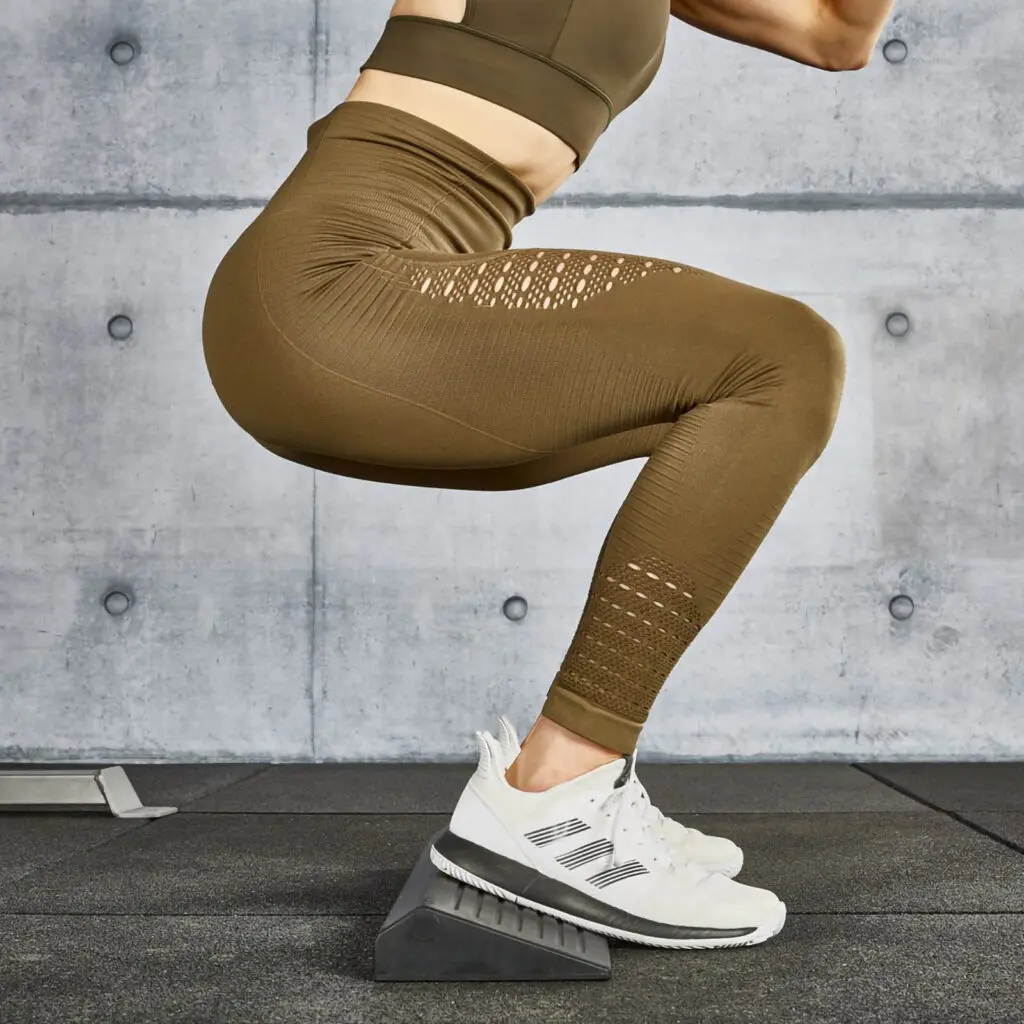
If ankle mobility is limiting your squat depth, squat wedges can elevate your heels and let you work through a full range of motion while you build flexibility.
Lower Your Injury Risk
Fitness experts say adequate mobility, stability, and motor control determine the health of your musculoskeletal system. Bodyweight squats improve all three areas simultaneously, which results in a reduced injury risk. This benefit appeals to hard training athletes, but you don’t need to be one to appreciate it.
Zero Equipment Required
Bodyweight squats don’t require any equipment. Unless you want to raise the bar by holding a barbell plate or a kettlebell to increase the resistance, bodyweight squats are exactly what they sound like: a simple exercise you can do in the comfort of your home gym, the beach, the park, and just about anywhere.
How to Do Bodyweight Squats
Getting the form right is non-negotiable. Sloppy reps don’t just limit results — they increase your injury risk. Here’s the step-by-step breakdown of proper bodyweight squat form.
- Set up your stance. Stand with your feet roughly shoulder-width apart. Point your toes slightly outward (about 15–30 degrees). Look forward, maintain a neutral spine, and brace your core.
- Initiate the descent. Bring your arms out in front of your chest and lightly clasp your hands together (or hold them straight out for balance). Push your hips back and begin bending your knees, as if you’re sitting into a chair.
- Hit depth. Lower yourself into a squatting position until your thighs are at least parallel to the ground — deeper if your mobility allows. Your weight should be distributed through your mid-foot and heels, not your toes.
- Drive back up. Push through your heels as you return to the starting position. Squeeze your glutes at the top. That’s one rep.
Key form cues to remember:
- Keep your chest up and your back flat throughout the entire movement
- Don’t let your knees cave inward — they should track over your toes
- Maintain a braced core from start to finish
- Control the tempo — don’t just drop and bounce
Safety Tips for Bodyweight Squats
Just because bodyweight squats are a basic exercise with no equipment doesn’t mean you can’t do them wrong. Follow these tips so you can reap their full benefits.
Focus on form first. Doing any exercise recklessly negates its effectiveness. For example, you’ll produce more tension in the joints and ligaments of your spine if you don’t keep it neutral while doing bodyweight squats. You’ll also compromise your stability. When you prioritise your form, you’ll not only prevent potential injuries but also achieve your long-term fitness goals.
Use slow, controlled reps. Try lowering yourself for two seconds, pausing at the bottom, and driving back up for two seconds. When you do slow reps on bodyweight squats, you place your lower body under greater tension. The greater the tension, the more muscle you grow.
Ask for feedback. If you’re a beginner, ask a mate who’s a seasoned lifter to check your form. When doing bodyweight squats for the first time, having an experienced fitness enthusiast (better if they’re a certified personal trainer) by your side means they can offer sound advice to help you do this exercise correctly.
Bodyweight Squat Variations
| Variation | Difficulty | Primary Target | Notes |
|---|---|---|---|
| Sumo Squat | Beginner | Inner thighs, glutes | Wide stance, toes pointed further outward |
| Pulse Squat | Beginner | Quads | Pulse at the bottom for 3–5 reps before standing |
| Jump Squat | Intermediate | Quads, glutes, calves | Explosive — great for power development |
| Bulgarian Split Squat | Intermediate | Quads, glutes (unilateral) | Rear foot elevated on a bench or chair |
| Pistol Squat | Advanced | Quads, glutes, balance | Single-leg squat — demands serious mobility and strength |
| Box Squat | Beginner | Quads, glutes | Squat down to a chair or box — ideal for learning depth |
| Tempo Squat (3-1-3) | Intermediate | Quads, glutes | 3-second descent, 1-second pause, 3-second ascent |
For a complete bodyweight squats workout, pick 2–3 variations and perform 3–4 sets of 12–20 reps each. Pair them with lunges, calf raises, and glute bridges for a well-rounded lower-body session.
Drawbacks of Bodyweight Squats (and How to Progress Beyond Them)
The biggest drawback of bodyweight squats is the lack of progressive resistance. You’re only working against your own body weight, so once your legs adapt, the stimulus plateaus. Progressive overload — gradually increasing the resistance — is one of the keys to building muscle. If you don’t up the ante, you can kiss your muscle growth aspirations goodbye.
Relying solely on bodyweight squats to build your leg muscles is going to hit a plateau sooner rather than later. The best case scenario is to complement your bodyweight squats with other proven leg exercises such as leg presses, lunges, calf raises, leg extensions, and lying leg curls. Unlike bodyweight squats, these exercises allow you to apply the principle of progressive overload far more effectively.
How to keep progressing:
- Add resistance bands. Loop a resistance band around your thighs or over your shoulders to increase the load without touching a weight.
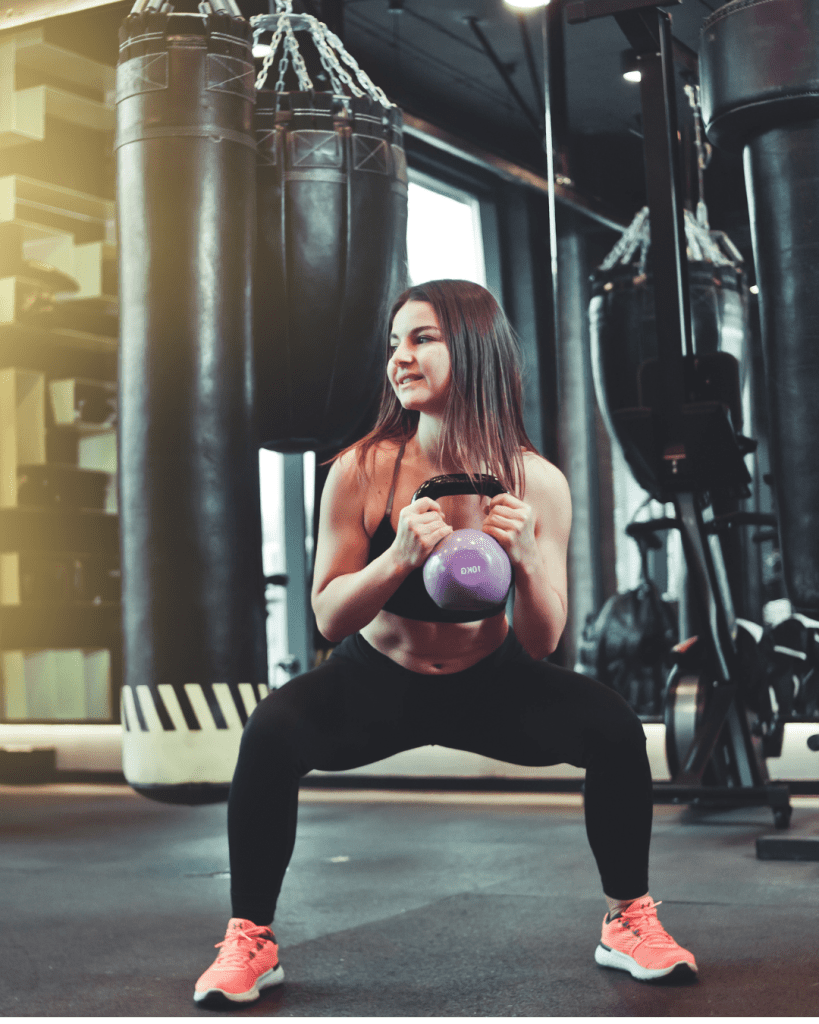
- Hold a kettlebell or weight plate. A goblet squat with a kettlebell is the natural next step from bodyweight.
- Invest in a leg machine. For serious leg development, leg machines such as a hack squat or leg press allow you to load your legs progressively well beyond body weight. If space and budget are tight, an ATX Squat Calf Machine delivers squats, calf raises, and viking press in a compact footprint.
- Build a power rack setup. A power rack with a barbell opens up every squat variation imaginable — front squats, back squats, pause squats, pin squats — and lets you progress for years.
If you want to learn how to put together a complete leg training program, check our breakdown on how bodybuilders build massive legs.
Bodyweight squats for strength training
Bodyweight squats are a valuable compound exercise that deserves a place in any routine. If you’ve got chicken legs, start off with this exercise and stay consistent to enjoy gains down the track. Whether you’re a rookie or a pro, doing bodyweight squats will give you the results you want from your strength training — and when you’re ready to go heavier, Sam’s Fitness has the gear to get you there.
FAQ — Bodyweight Squats
Yes, especially for beginners. Bodyweight squats build foundational quad and glute strength. However, once you can comfortably perform 20+ reps, you’ll need to add resistance (bands, kettlebells, or barbell squats) to keep progressing.
You can, but it depends on your training intensity. Light daily bodyweight squats (15–20 reps) can improve mobility and blood flow. However, if you’re training to failure or doing high-rep sets, your legs need recovery time — at least 48 hours between intense sessions.
Beginners should aim for 3 sets of 10–15 reps. Intermediate trainees can push to 3–4 sets of 15–25 reps. If you’re doing 25+ reps easily, it’s time to add resistance or switch to a harder variation.
Yes. The glutes are a primary mover in any squat pattern, especially when you squat deep (below parallel). For maximum glute activation, focus on full depth and squeeze hard at the top.
They’re not better or worse — they serve different purposes. Bodyweight squats are ideal for beginners, warm-ups, mobility, and high-rep conditioning. Weighted squats are essential for progressive overload and building serious muscle and strength. Use both.
There’s no difference. “Air squat” is just another name for a bodyweight squat. Both refer to the same exercise — squatting with no external load.