 Home Gym Power Rack: The Best Addition to Your Training
Introduction
If you are currently researching a gym equipment purchase, you are probably reading a lot of recommendations for home gym power racks, especially on forums. And for good reason. In terms of functionality, safety and effectiveness, the power rack for home gym would be right at the top of anyone’s list. If you’ve been sitting on the fence, hopefully this guide settles it for you.
If you’ve already got one, we will hopefully show you a few extra tips and tricks to get the most out of your training experience.
Why Compound Movements Are the Foundation of Any Home Gym
The beauty of weight training, and one of the reasons I preach it like a religion, is that you get the most benefit if you keep it simple. It has been proven time and time again, that if you perform compound movements with increasing intensity you will get stronger and build more muscle. Provided you are getting adequate rest and nutrition.
Compound exercises are movements that recruit multiple muscle groups at once. Exercises like bench press, squats, chin ups, dips, deadlifts etc require many large muscle groups to fire into action. Your body senses this activity, and responds by building muscle and strength.
Compare that to something like a bicep curl, which only activates one small muscle – the bicep – so the signal it sends is minor. Compound movements send the message loud and clear. So if you want big biceps to impress the ladies, do exercises like bench press, squats or deadlifts.
Aside from the cosmetic factor, compound movements are also preferable for their functional strength. By this I mean the strength you will develop from an exercise like squats is transferable to your functioning in everyday life. If you need to lift something heavy, you will bend your knees and drive with your legs – just like a squat.
Most importantly to me, squatting is just like getting off a chair. This is no big deal you might say, but what about when you are 80? There are plenty of old guys and girls lifting well into their senior years, and I bet they bounce out of the chair instead of being pushed around in it.
So what do compound movements have to do with power racks? Everything.
Safety: The Real Reason to Own a Power Rack
Compound movements are completely safe when performed with correct form and with the right equipment – safer than driving a car – I say this to give some perspective about what I am going to say next.
But some compound movements – namely bench press and squats – can cause serious injury or worse. People have died training alone after failing a bench press with no way to escape the bar. Every single one of those situations was preventable.
These people are prime candidates for the Darwin awards, considering that investing in a proper power rack or half rack not only does not cost a lot more, but these days they don’t have to take up more space. Considering the amount of use and the benefits offered by spending that bit extra, it really is a no brainer.
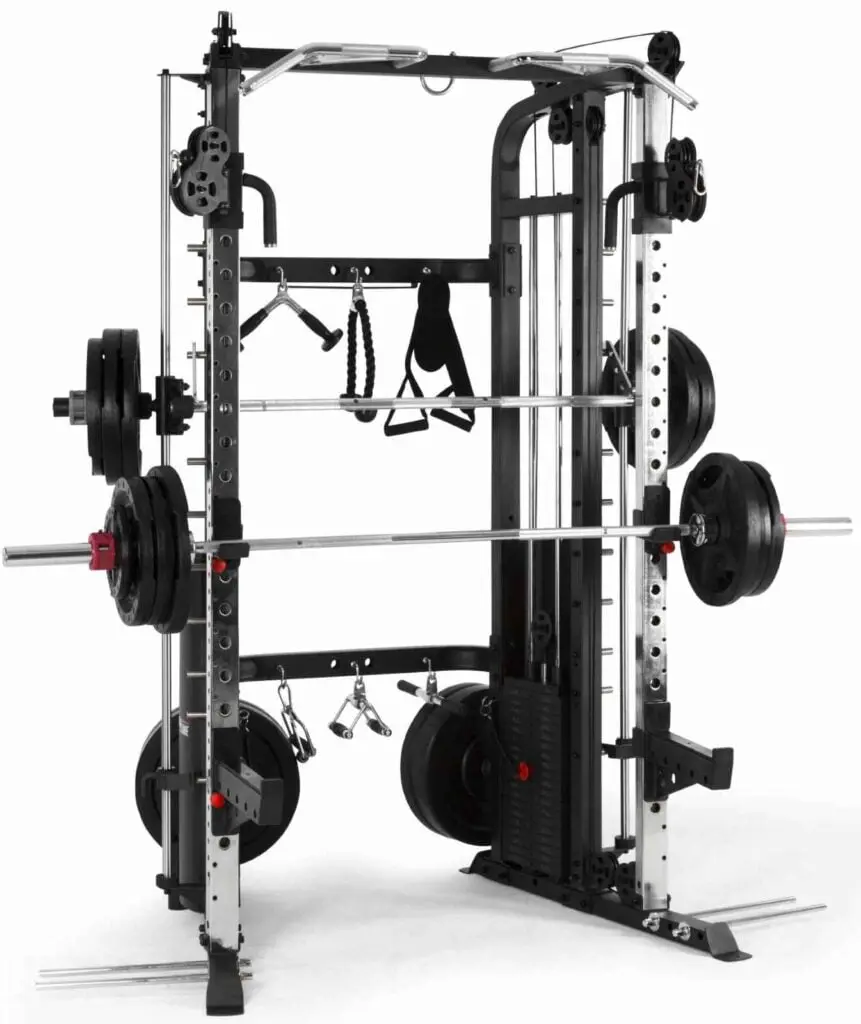
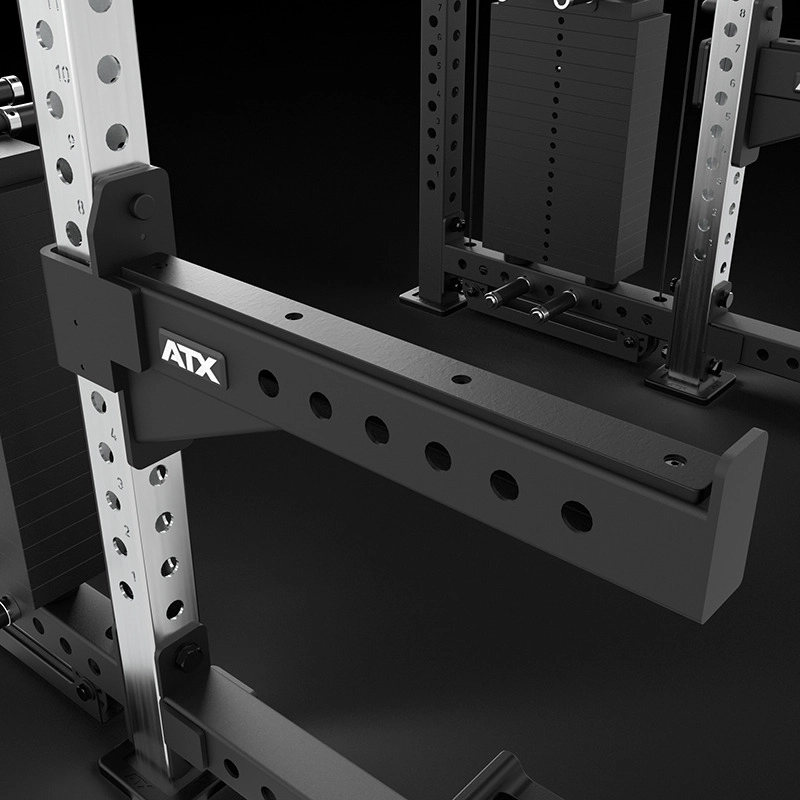
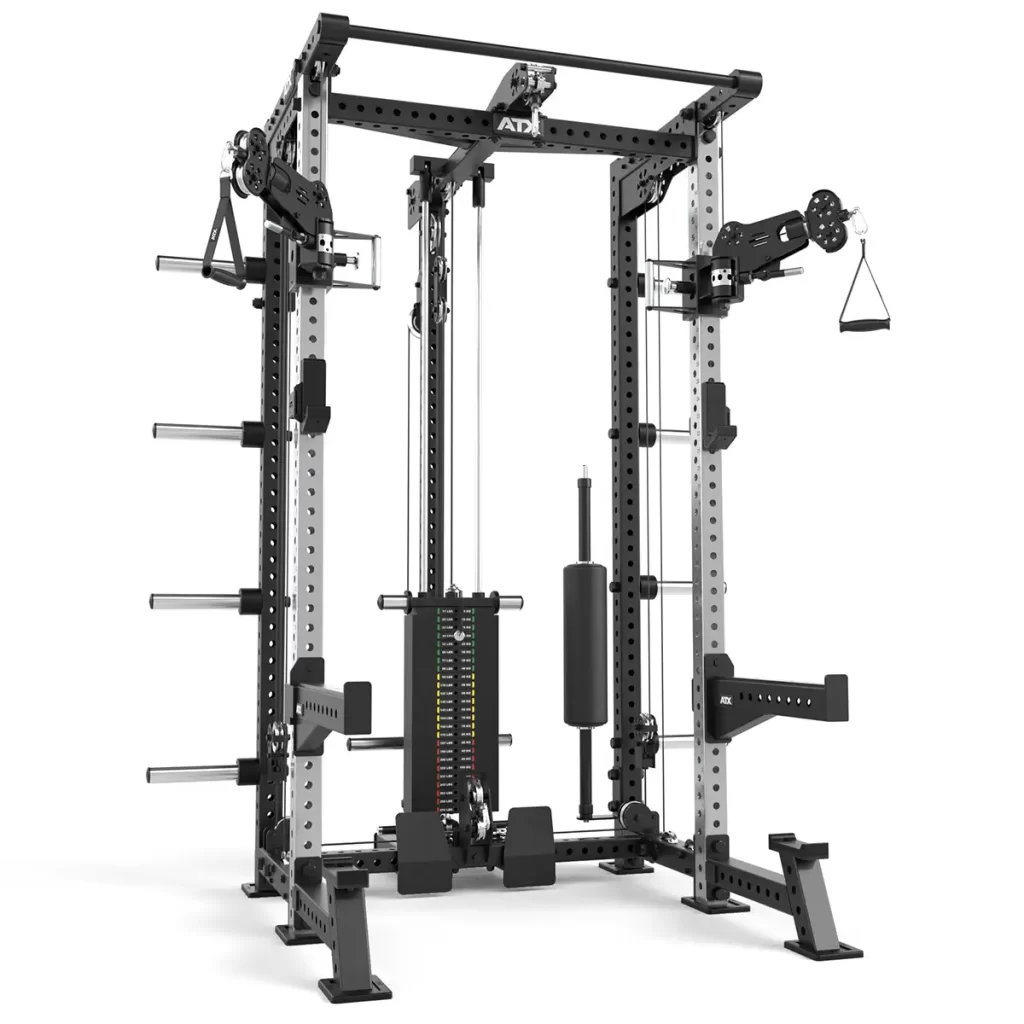
The way a power rack keeps you safe is straightforward: four steel uprights enclose the barbell and restrict its movement to the front and rear. Adjustable spotter bars (also called safety arms) restrict downward movement. You set them just below the bottom of your range of motion, so you still have full movement — but if you can’t complete a rep, you simply set the bar down and walk out.
Better quality racks have hole spacing of only 50mm apart, which means you can get the spotter bars into the exact position for your bench press or squat depth — not just close enough. Some racks also
Half Power Rack vs Full Power Rack: Which One Do You Need?
This is one of the first questions I get from people setting up a home gym. The short answer: if you have the space, go full rack. Here’s why, and when a half rack makes sense.
A half rack (or half power rack) uses two uprights instead of four. It’s more compact and generally more affordable, and for most exercises it works perfectly well. The limitation is that the bar is only enclosed on one side — so for very heavy squats or bench press, the safety margin is slightly lower than a full four-post cage.
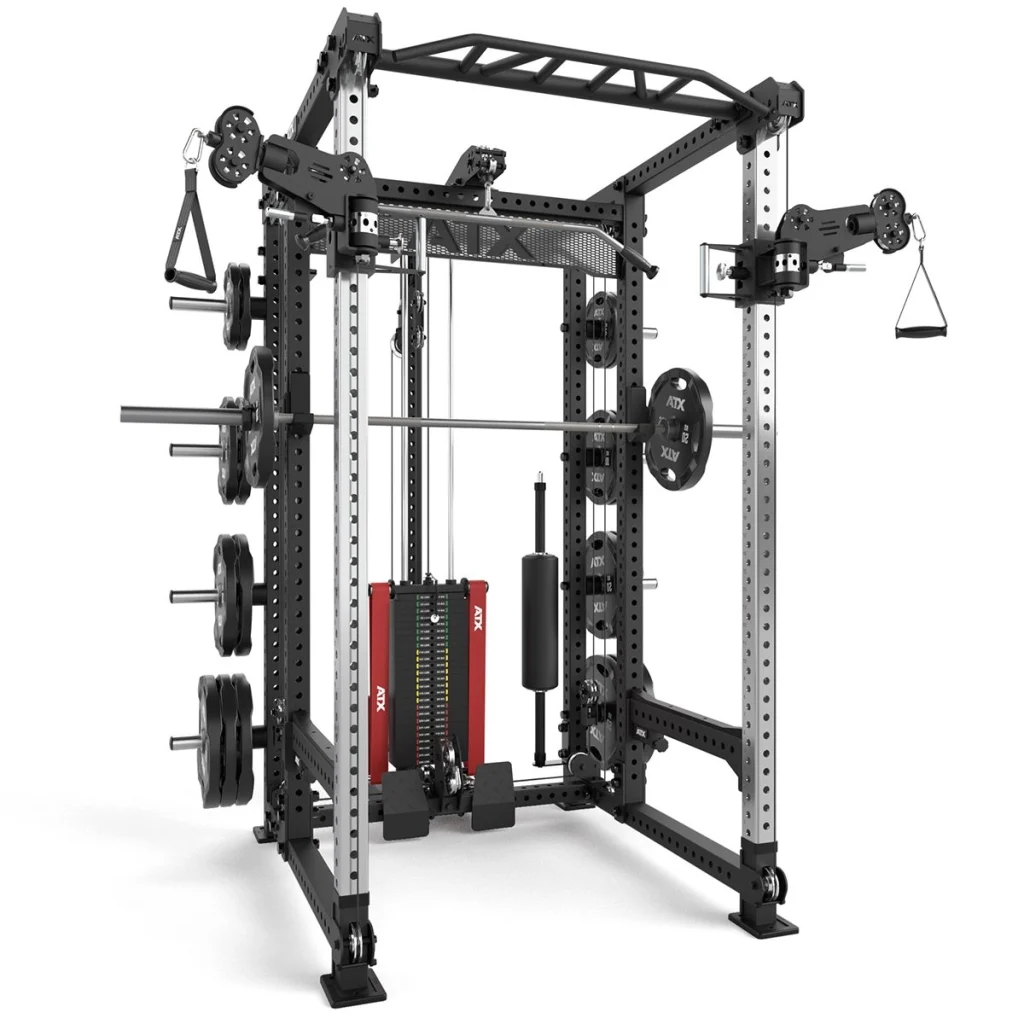
A full power rack encloses you on all sides. The bar can’t tip forward or backward, you can bail safely from any position, and the structure itself tends to be more rigid under heavy loads. For anyone planning to push their strength seriously over the years, it’s the better long-term investment. We’ve put together a full breakdown if you want to go deeper: Half Rack vs Power Rack
| Feature | Half Power Rack | Full Power Rack |
| Space Required | Compact — suits tight spaces | Larger footprint — needs dedicated area |
| Safety | Two uprights; open on one side | Four uprights; fully enclosed |
| Solo Training Safety | Good | Best — bar can’t tip forward or back |
| Exercise Range | Squats, bench, overhead press | Everything + more stability for maximal loads |
| Spotter Arms | Yes, but open-sided | Yes, fully enclosed on all four sides |
| Price | More budget-friendly | Higher upfront, more long-term value |
| Best For | Beginners or space-limited homes | Anyone training seriously long-term |
What About Folding and Wall-Mounted Power Racks?
If your home gym doubles as a garage or a spare room you need to use for other things, a folding power rack or wall-mounted power rack might be worth a look. These fold flat against the wall when not in use, which can recover several square metres of floor space — a real advantage in a smaller Australian home.
The trade-off is rigidity. Folding racks are generally less solid than freestanding full racks, and the wall mounts need to go into proper studs or masonry. If you’re training with genuinely heavy weights, a freestanding full rack wins. For most home gym users, though, a good folding rack is a perfectly practical solution.
Home Gym Power Rack Exercises: Far More Than Just Squats and Bench Press
So you now know you can perform some really important exercises with complete safety. You are probably thinking is that all you can do? Sounds boring?
Nothing could be further from the truth, as a matter of fact the number of exercises and variations is almost endless. One of the best parts of training at home with a power rack is discovering new exercises or coming up with variations of old favourites. Once you nail down the basics, dig out some old bodybuilding or powerlifting books and see some classics. Or jump online and join a forum to get some ideas.
There are also exercises which are best performed or easier to do in a power cage.
Bench press
Aside from the safety advantages I mentioned earlier, bench pressing in a power rack is often better than using a dedicated bench press station. The J-hooks — the supports the bar rests on — can be moved into the perfect position for where you want to start and stop the movement. Some dedicated bench press stations only offer three or four height positions. In a good rack, you can fine-tune this precisely.
This system also allows you to perform the bench press variations like incline press and decline press. So, you will be able to test and try different positions and work out what works best for you.
The spotter bars are also handy in that they let you know if you are performing the exercise with correct form. Sometimes you can bring the bar down crooked and without spotter bars you would be none the wiser. However, with spotters the bar will touch one side first and you will be able to make the necessary adjustments to your form.
The bench press works your pushing muscles which include your pecs, triceps and the front part of your shoulder muscles. So, the front half of your upper body. Once you are handling a challenging weight, you can really feel it in your core too.
But don’t fall into the trap of trying to win bragging rights by trying to bench massive weight with poor form. Not only do you risk injury, you won’t engage the target muscles correctly, thus hampering your long-term development in this exercise.
Squats
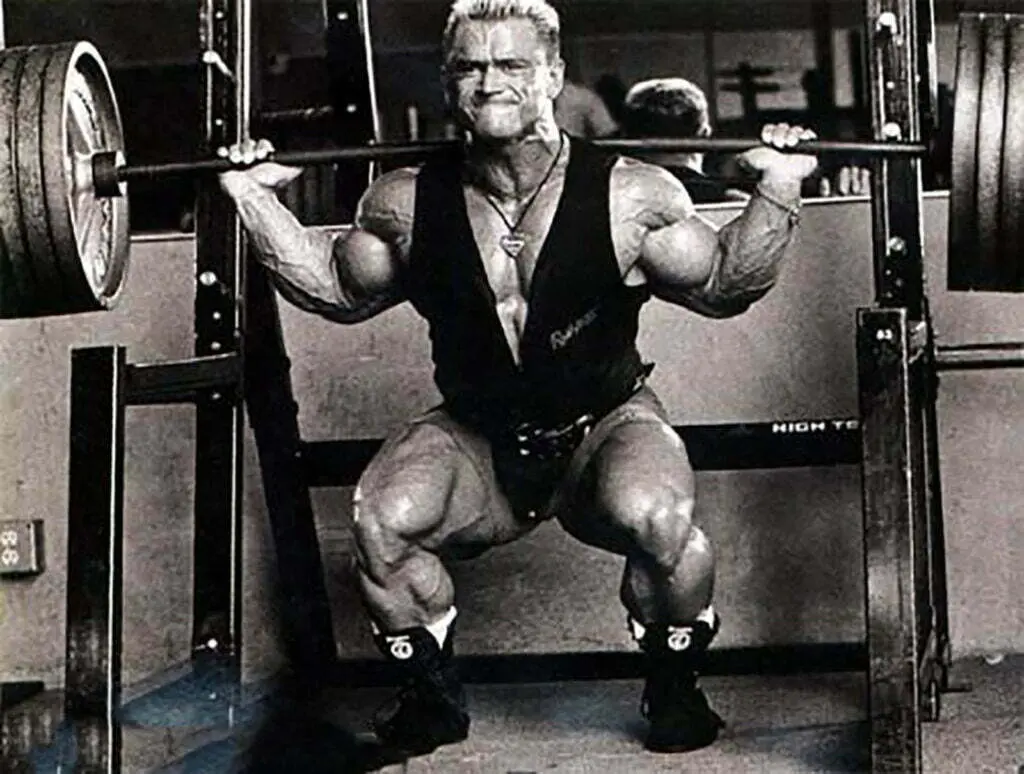
Performing squats in a power rack has the same benefits mentioned with bench press above. The structure of the cage plays a more important role in this exercise. Having the peace of mind that your movement is restricted forward, backward and downward will allow you to better focus on your technique and engaging the correct muscles in the right sequence.
Done properly, this exercise will recruit so many muscles in your body. Naturally your legs and lower back will do most of the lifting, but your upper body will also be stimulated as it supports the bar on your shoulders. Once you get up to handling some taxing weights, the old lungs will be on fire giving a cardio vascular benefit too.
How to Use a Home Gym Power Rack for Squats
- Set J-hook height: Position the hooks so the bar sits across your upper traps at roughly mid-chest height when standing. You should unrack with a slight leg drive, not a full stand.
- Set spotter bar height: Squat to your intended bottom depth, then set the safeties just below that point. The bar should never touch them during a normal rep.
- Load and collar the bar: Add plates evenly on both sides. Never skip the collars.
- Unrack: Step under the bar, brace your core, and stand upright. Step back one or two steps — no more.
- Re-rack: After your set, step forward to meet the J-hooks. Don’t try to locate them precisely while under load — just walk forward until the bar contacts them.
Chin ups
Now I can’t think of any home gym power rack that doesn’t come with some form of chin up bar these days, so chin ups can be considered a standard power rack exercise. Chin ups work your pulling muscles – lats, back and biceps – which makes them the perfect complement to the pushing work you’re doing on bench press.
If you are just starting out in training or carrying a bit extra bodyweight and don’t have the strength to perform this exercise correctly don’t despair! There are many ways around this. Use a resistance band looped over the bar for assistance, or get a step and start from the top position and lower yourself slowly. Many modern racks also have multi-grip chin-up bars with different handle widths and angles — this variety reduces joint stress and gives you more training options.
Dips
Dip handles are nearly standard on quality racks these days, or can be purchased as an add-on. If you can’t get dip handles for your power rack, you can get gymnastic rings and suspend them from your power rack – proving yet again why they are so great. Power racks are great for improvising.
The dip has often been described as the upper body squat, as it recruits so many muscles in the upper body. If you can’t perform this exercise properly at your current bodyweight, you can use resistance bands for assistance. Once you get strong, you can add weight with a dip belt or weighted vest.
Inverted rows
While we have the dip handles out, why not try inverted rows. Instead of pushing yourself up with dips, slide underneath your dip handles and pull yourself up. Building your strength on this exercise will help you perform chin ups. . If you don’t have dip handles, set the barbell on the J-hooks at waist height and row off that. You’ll get a different grip angle, which is actually a useful variation.
Shoulder press
The overhead press is the main event if you want to build cannonball shoulders. Even though this exercise is specifically targeting the shoulders, your arms and in particular triceps will feel the burn too. Set the J-hooks at the correct starting height and press from there. Your triceps will feel it almost as much as your shoulders at heavier weights. If your bench is getting in the way — the rear leg hitting the back of the rack — try moving it toward the front uprights instead.
Hanging ab raises
The chin-up bar isn’t only for chin-ups. Hang from it and perform leg raises for one of the most effective core exercises you can do. If holding on for extended periods is a challenge early on, ab slings that you suspend your arms through are a cheap and practical fix.
Barbell exercises
If I expanded on all the barbell exercises and their variations that can be done with the aid of a power rack, this guide would end up longer than War and Peace! Some of the exercises I mention here can technically be done without the aid of a power rack, but are a lot easier to do thanks to a power rack. Plus, some of them are just variations of exercises already mentioned. A few worth mentioning specifically:
- Shrugs — Load the bar on the spotter bars at standing height. Far easier to set up than lifting from the floor, and lets you focus all your effort on the actual movement.
- Rack Pulls — A deadlift variation starting from the spotter bars at mid-shin height. Excellent for building the upper portion of the deadlift and loading the back heavily.
- Front Squats — More quad-dominant than back squats. The rack makes setup far more accessible.
- Barbell Lunges, Upright Rows, Bicep Curls, Reverse Curls — All made easier with a fixed starting position.
Home Gym Power Rack Attachments
As the popularity of power cages increased, a market developed for optional add ons to further enhance the training experience. This is where a quality rack really separates itself from a basic squat stand — because the right attachments can turn your rack into a complete commercial-style gym setup without eating up significantly more floor space.
Lat Pulldown and Cable System
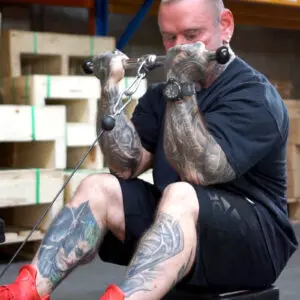
This is the single most impactful upgrade you can make to a home gym power rack . A bolt-on high and low pulley system adds a lat pulldown and seated row machine to your existing setup — effectively giving you a commercial-quality lat machine in your home gym without taking up an extra few square metres.
Look for a cable system based on a commercial stand-alone lat machine rather than a lightweight home-gym add-on. The difference in durability and feel under load is significant. With this one attachment, the list of exercises explodes:
- Lat Pulldowns — wide bar, neutral grip, single-arm
- Seated Rows
- Tricep Pressdowns and Overhead Extensions
- Bicep Cable Curls
- Face Pulls
- One-Arm Cable Crossovers
- Lateral and Front Raises
- Cable Crunches
- Hamstring Curls
- Upright Rows
Other Attachments Worth Knowing About
- Dip Handles — Either included standard or available separately. Essential for dips, inverted rows, and gymnastic ring work.
- Chin-Up Bar — Different handle widths, angles, and grip thicknesses. Reduces joint stress and adds variety to your pulling work.
- Band Pegs — Let you attach resistance bands to the base of the rack for accommodating resistance on squats and bench press. Popular with powerlifters.
- Landmine Attachment — A rotating sleeve that anchors one end of the barbell to the rack, opening up landmine rows, presses, rotational work, and more.
Frequently asked questions
A squat rack (or half rack) uses two uprights and is open on the sides. A full power rack uses four uprights, fully enclosing the lifter on all sides. Both allow you to safely perform squats and bench press alone, but the full rack offers more stability and a greater safety margin — particularly for heavier loads. If space allows, the full rack is the better long-term choice.
Absolutely — and for most people in Australia, this is exactly what they’re designed for. Most full racks require a ceiling height of around 220–240cm and roughly 120cm x 120cm of floor space. Folding and wall-mounted options are available if space is tight. A garage or double-car garage is the ideal setup, but many people use them in spare rooms without any issues.
The right rack depends on your budget, space, and goals. Key things to look for: hole spacing of 50mm or less, solid steel spotter bars, a weight rating appropriate for your current and future strength levels, and available attachments if you plan to expand.
Final Word on the Home Gym Power Rack
The power rack is, without question, one of the best investments you can make in your training. It makes the most important exercises safer, more versatile, and more adjustable. It removes every excuse not to train hard. And with the right attachments — particularly a cable system — it becomes a complete training facility that would cost you many times more to replicate in a commercial gym membership over the years.
Sources
Paoli A, et al. Resistance Training with Single vs. Multi-joint Exercises at Equal Total Load Volume. Frontiers in Physiology, 2017. pmc.ncbi.nlm.nih.gov/articles/PMC5744434
Westcott WL. Resistance Training is Medicine: Effects of Strength Training on Health. Current Sports Medicine Reports, 2012. pubmed.ncbi.nlm.nih.gov/14552938