
 Cable Machine Buying Guide: What to Get for a Home Gym
Last updated: 21 October 2026
This buying guide for your new Cable Machine will help you transform your home gym. Cable machines offer amazing exercise variety and functionality. However choosing the right one can be incredibly confusing. This guide will help you understand the different options and how they will perform in your home gym.
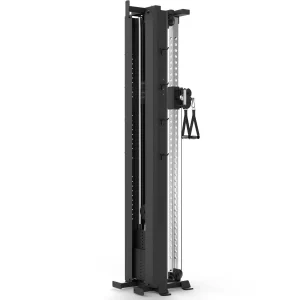
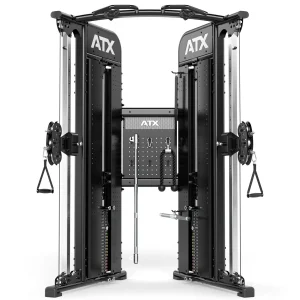
Cable machines can be broadly classified for broad groups: single stack, dual stack, rack mounted or all in gym machines.
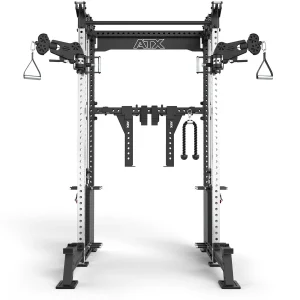
Cable Machine Comparison: Will It Fit in Your Garage?
The two numbers that decide which gym cable machine you can buy are ceiling height and floor space. Measure both before you look at anything else. Figures below are from the ATX® range on our site in October 2026.
| Type | Footprint | Machine height | Weight stack | Pulley ratio | Price (AUD) |
|---|---|---|---|---|---|
| Single stack (wall mounted) | 40 x 40 to 60 x 51 cm | 222–237 cm | 50–65 kg | 2:1 (some also 1:1) | $1,625–$2,295 |
| Dual stack (functional trainer or crossover) | 45 x 55 cm wall unit to 158 x 109 cm freestanding; crossovers need up to 2.8 m of width | 198–223 cm | Plate loaded, 80 kg, or 2 x 100 kg | 2:1 | $1,395–$4,995 |
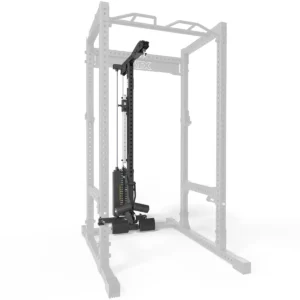
| Rack-mounted lat option | Adds to the back of your rack | Same as your rack (195–228 cm) | Plate loaded or 100–125 kg | 1:1 | $425–$1,995 (rack not included) |
| All-in-one (rack + cables) | About 128 x 120 cm to 186 x 190 cm | 220–232 cm | 2 x 90 kg, or 125 kg | 2:1 (crossovers), 1:1 (lat) | $3,525–$6,595 |
As a rule, a standard 2.4 m Australian garage ceiling fits every machine in this table, but leave some room above for assembly. If your ceiling is only just over 2 m, the plate-loaded ATX® Cable Crossover 500 at 198 cm is the one built for low ceilings.
Pulley Ratios Explained: 1:1 vs 2:1
This is where most buyers get confused, so here it is simply.
1:1 means you feel the full stack. Pin 10 kg and you lift 10 kg, and the stack moves exactly as far as your hand. Most lat pulldowns, seated rows and rack-mounted lat options are 1:1.
2:1 means you feel half the stack. Pin 20 kg and you only need about 10 kg of force to lift it, and the stack moves half as far as your hand. Some machines go further: 4:1 halves it again. A few, like the ATX® Single Cable Tower Machine PRO, switch between 1:1 and 2:1. And one thing that surprises people: on a 2:1 machine, clip both cables together and it works as 1:1.
To put numbers on it: if your hand moves 1 m, the stack moves 1 m on a 1:1 machine, 50 cm on 2:1 and 25 cm on 4:1. Pin 40 kg and you’ll feel 40 kg, 20 kg or 10 kg.
Why Not Make Every Machine 1:1?
- Smaller jumps. On a 2:1 machine each plate counts for half at the handle, so you can go up in small steps. That matters for isolation work, and for beginners and rehab clients who need gentle progressions.
- More range of motion. The handle travels twice as far as the stack, so you can do long movements like crossovers and presses on a machine that fits under a normal ceiling.
- Smoother at speed. For golf-swing practice, the stack moves at half the speed on 2:1. On 1:1 it flies up fast and can whip and sway.
Is a 90 kg Weight Stack Enough?
The ATX® 600 series all-in-one trainers come with two 90 kg stacks, and whether that’s enough is one of the questions we get asked the most. On a 2:1 machine, using one side gives you up to 45 kg.
Compare a barbell bench press with a dumbbell press. If you can bench 100 kg, you might be lucky to press 40 kg dumbbells, and on cables you’ll drop further still, to around 35 kg. Cables also take a while to get used to, because your stabilising muscles have to work harder to control the handles.
So ask yourself: are you using 55 kg dumbbells for anything, let alone isolation work? If not, you won’t max out these stacks, The majority of people training at home never will. Our article on is a 90kg stack enough goes into more detail.
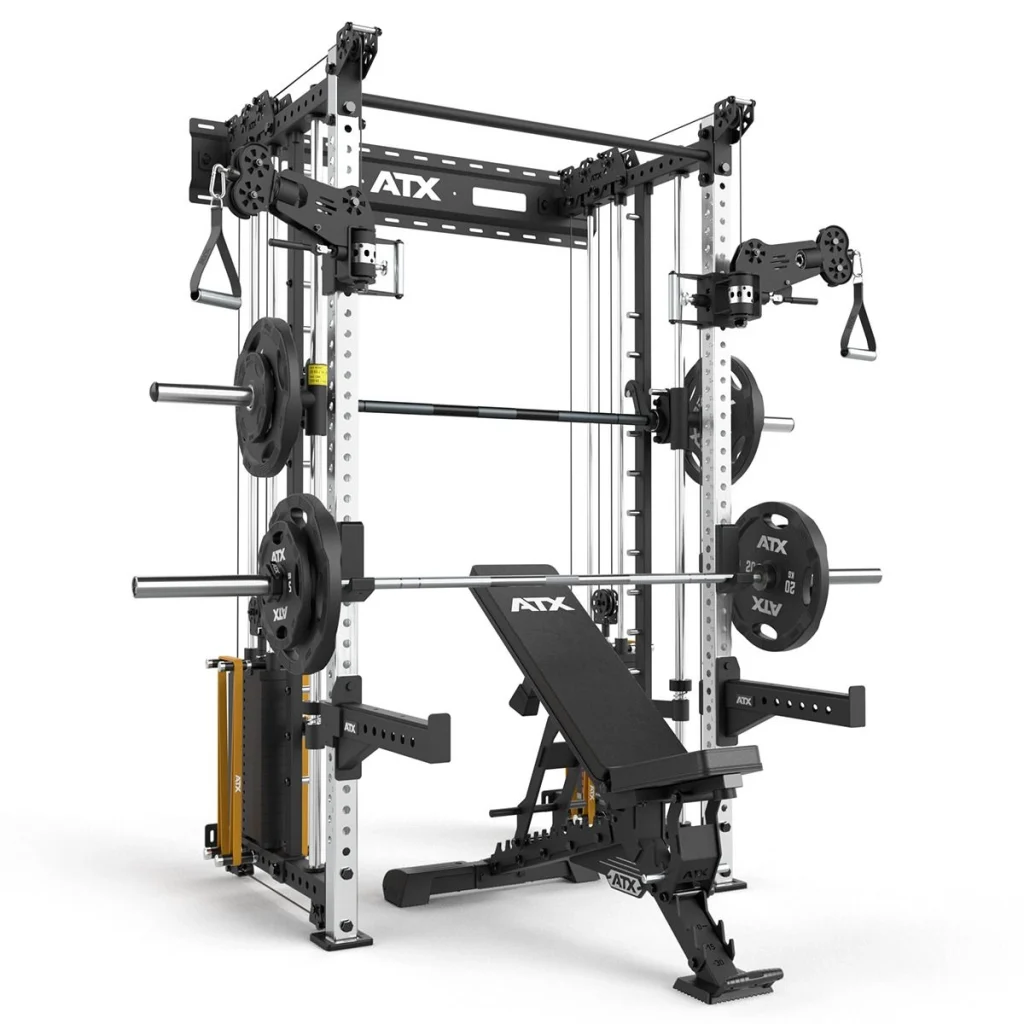
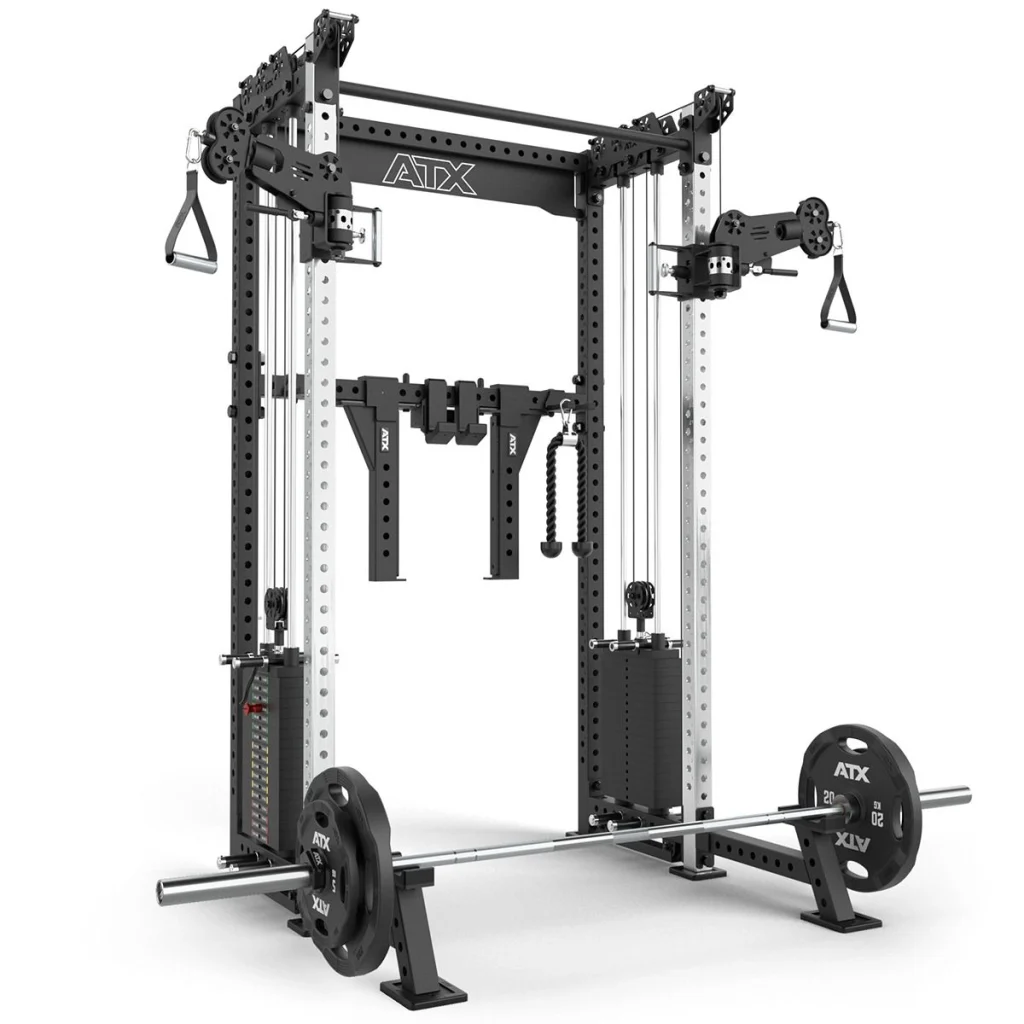
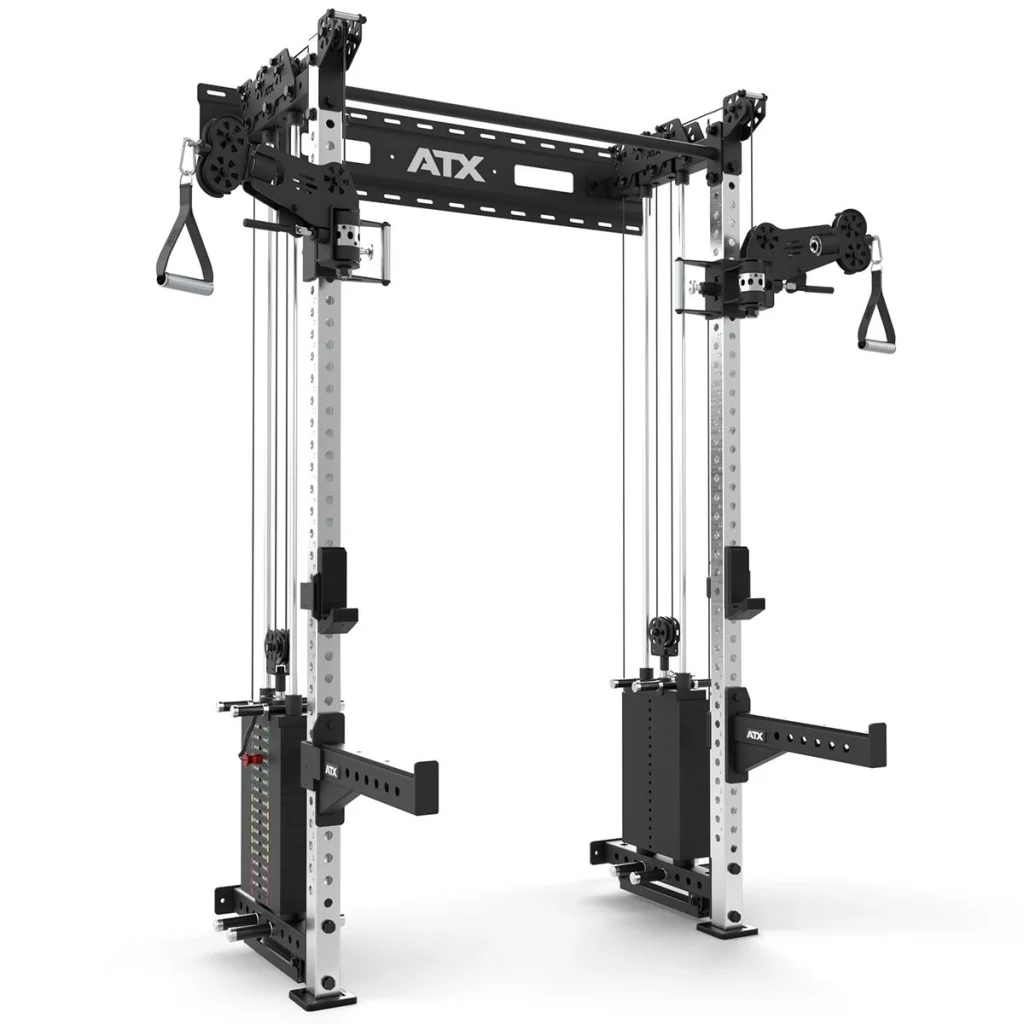
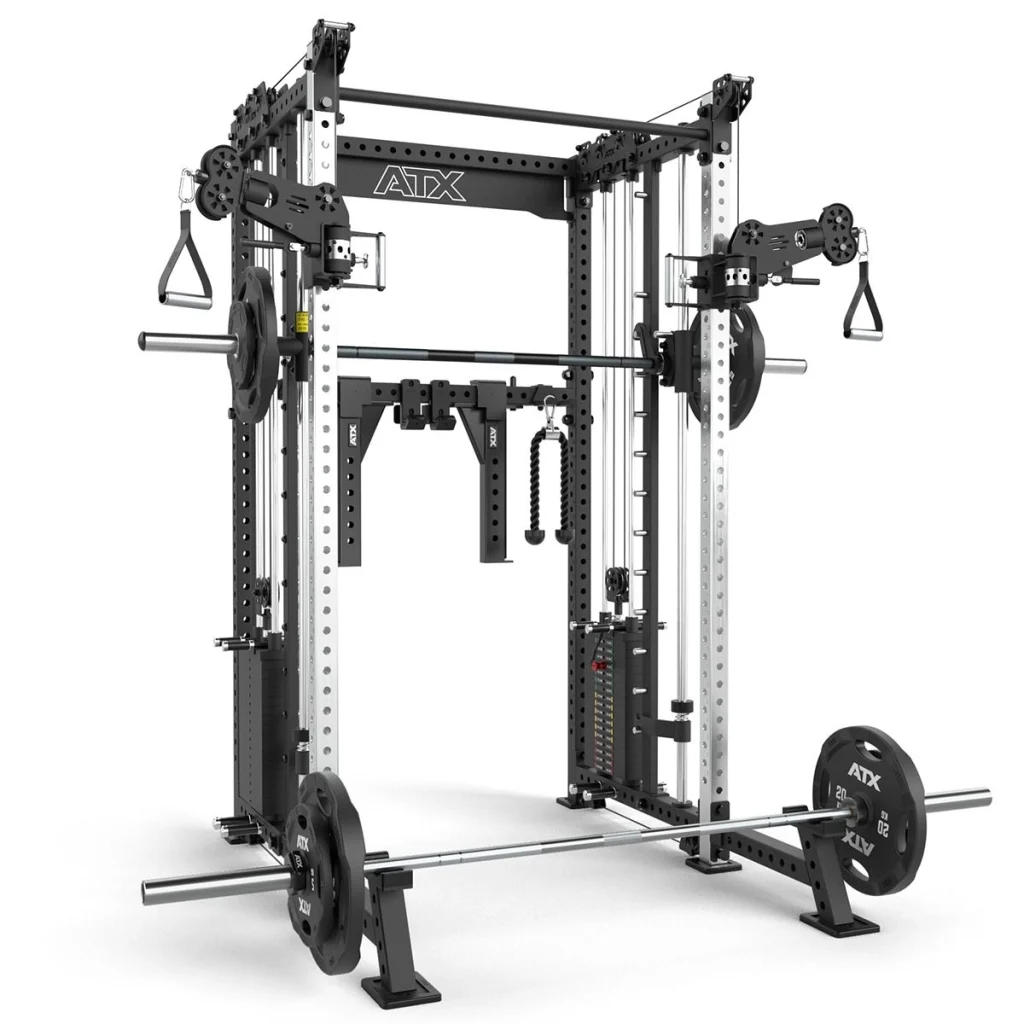
ATX 600 Series All in One Cable Machines
-

ATX® Wall Mounted Smith Rack with Cables
$4,145.00 -
ATX® Squat Rack with Cables
$3,845.00 -
ATX Half Rack with Cable Crossover
$3,525.00 -
ATX® Squat Rack with Smith and Cables
$4,395.00
Weight Stack or Plate Loaded?
Weight stacks have gone up in price, so they add a lot to the cost of a machine. I still use a plate-loaded lat attachment on my own power rack, because I actually prefer it. It’s a bit more effort to change plates, but we’re weight training, we’re not lazy. The one downside is that you need room at the back for your biggest plate, whereas a weight stack can sit flush against the wall.
If money and space not an issue, get a weight stack machine. But if you’ve got budget constraints and you’re trying to build a complete home gym from scratch, the extra money you spend on that weight stack machine could go towards buying a smaller machine. If you are deciding between the two, our article on whether to buy plate loaded or weight stack machines goes through it in detail.
Adding Cables to a Power Rack You Already Own
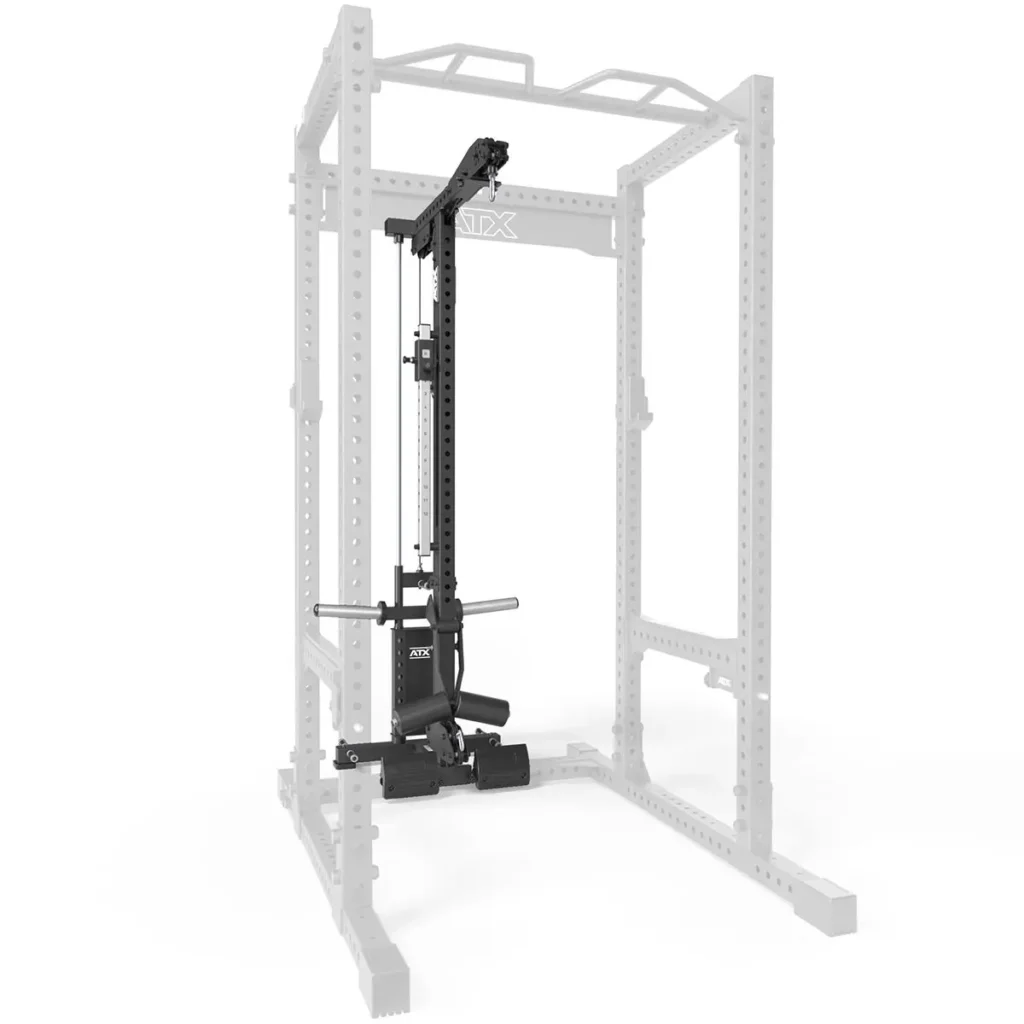
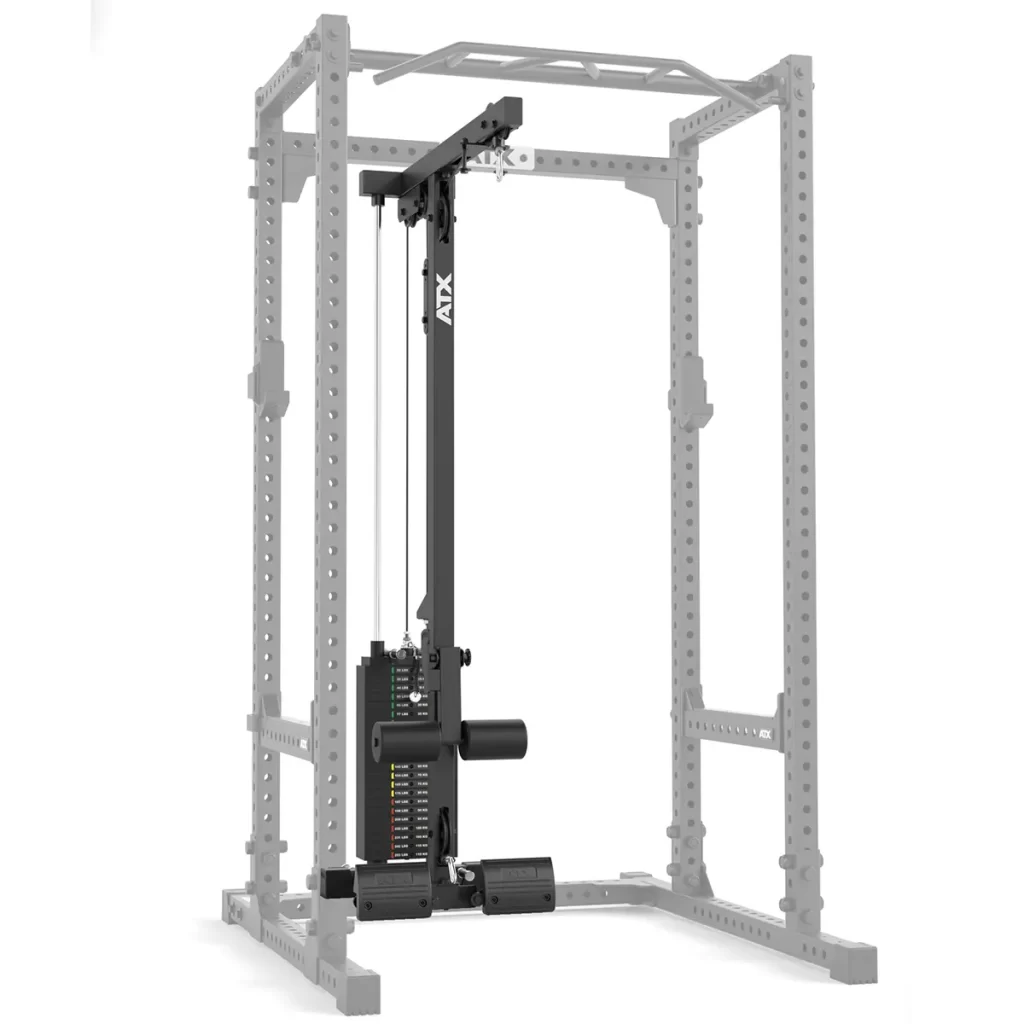
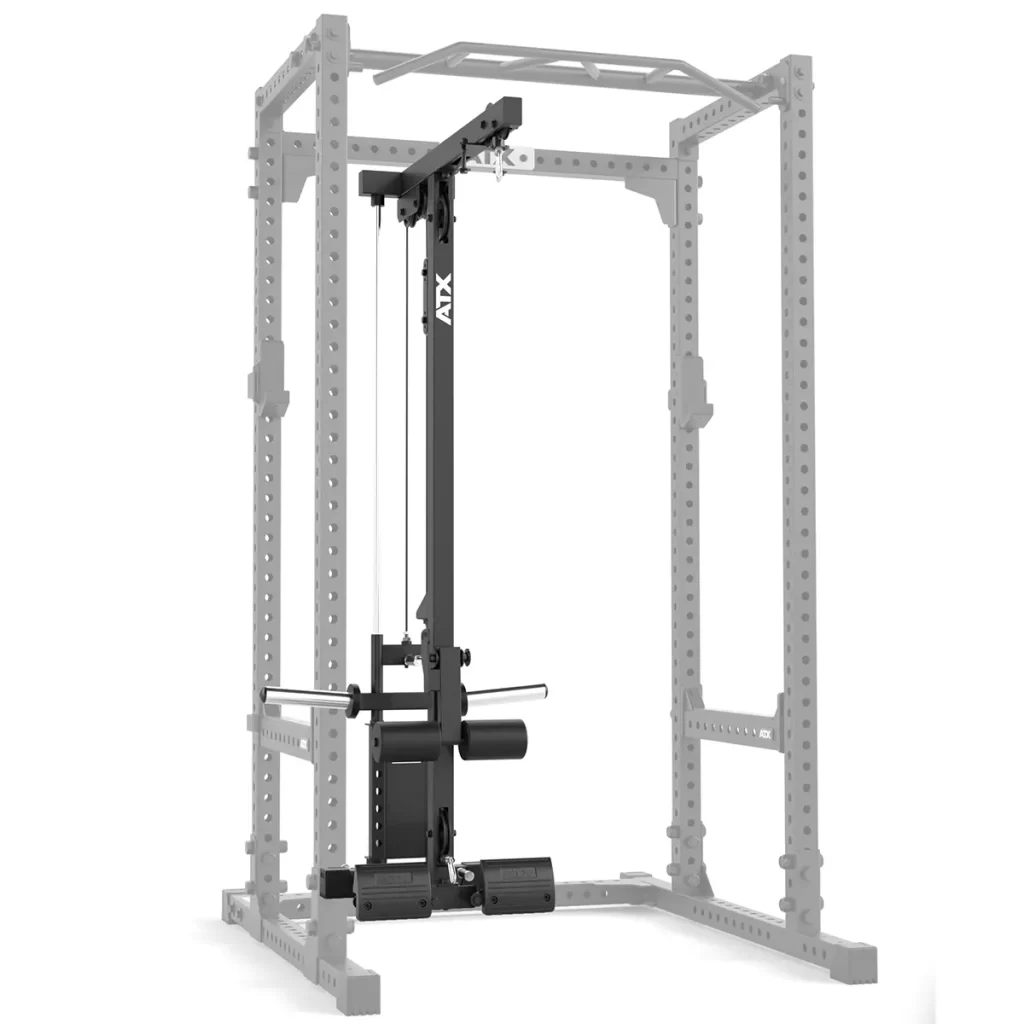
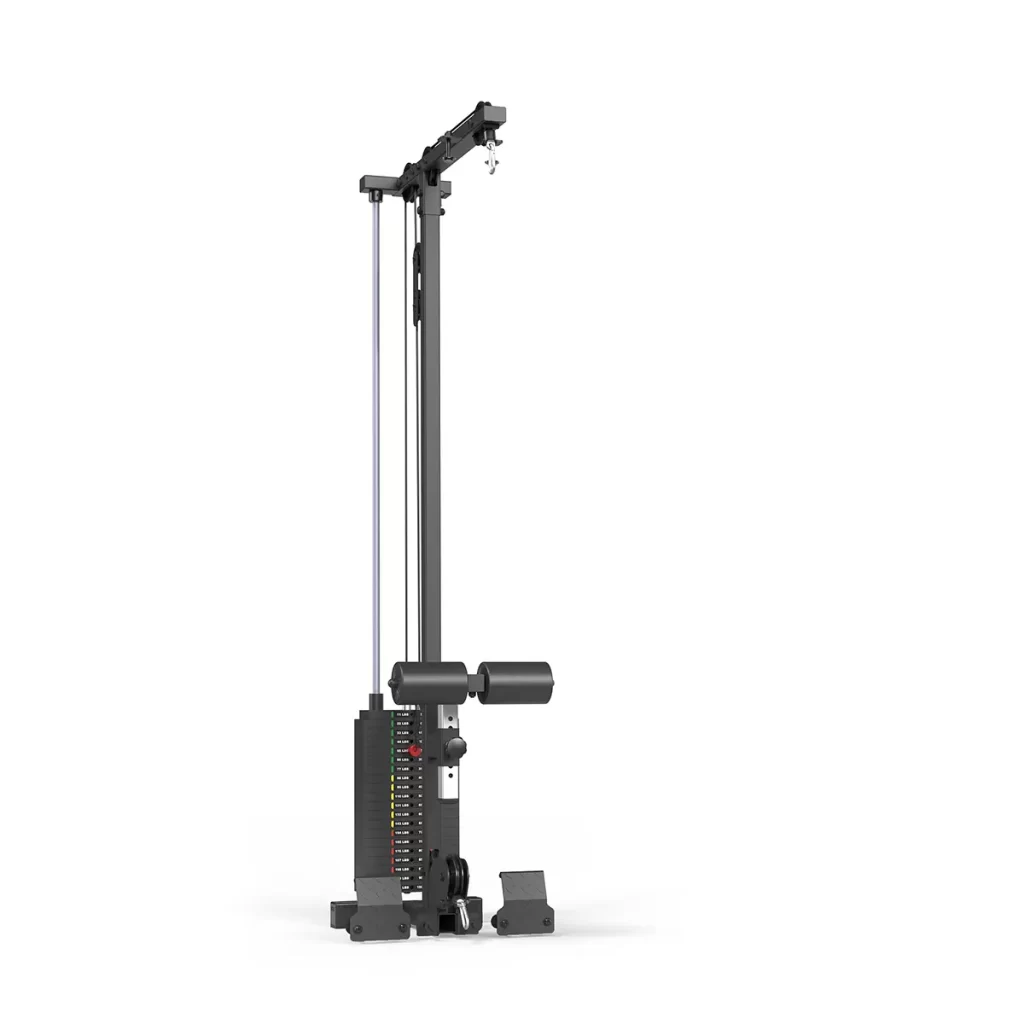
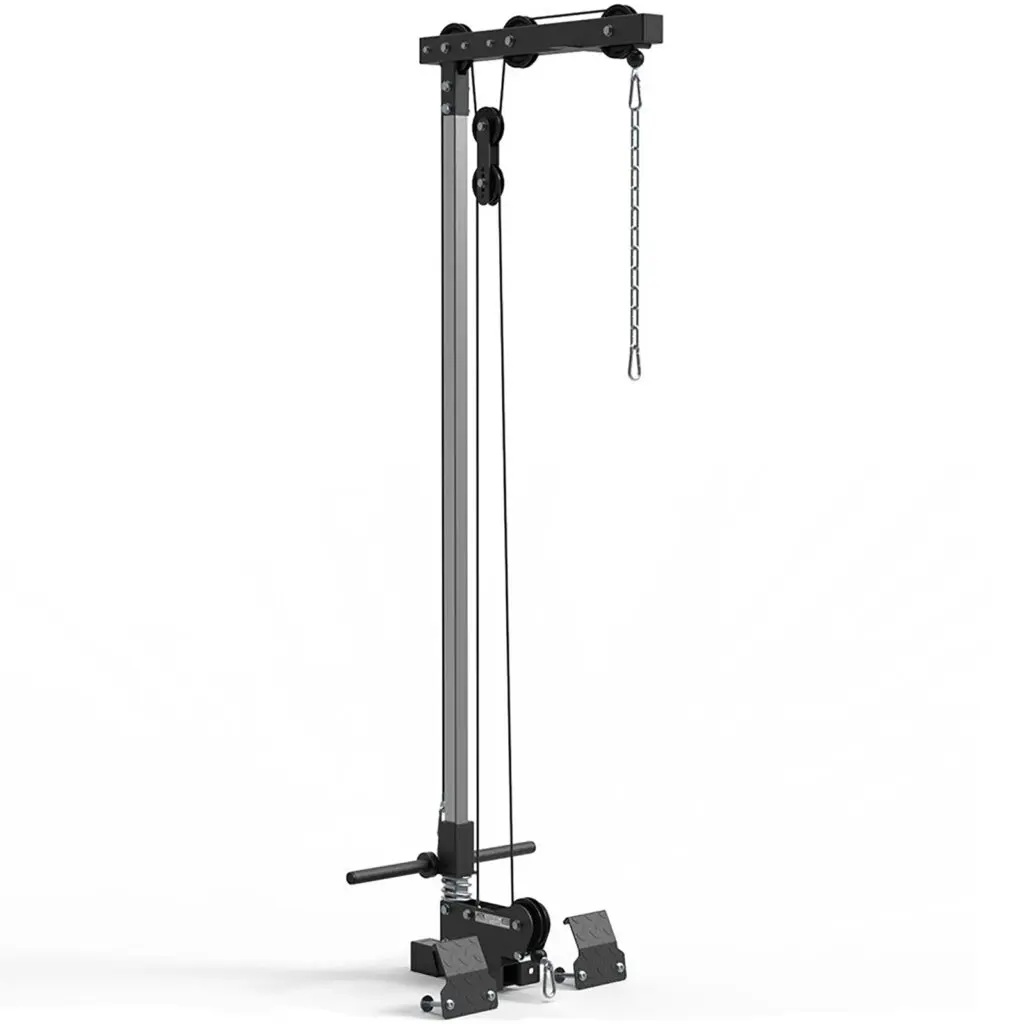
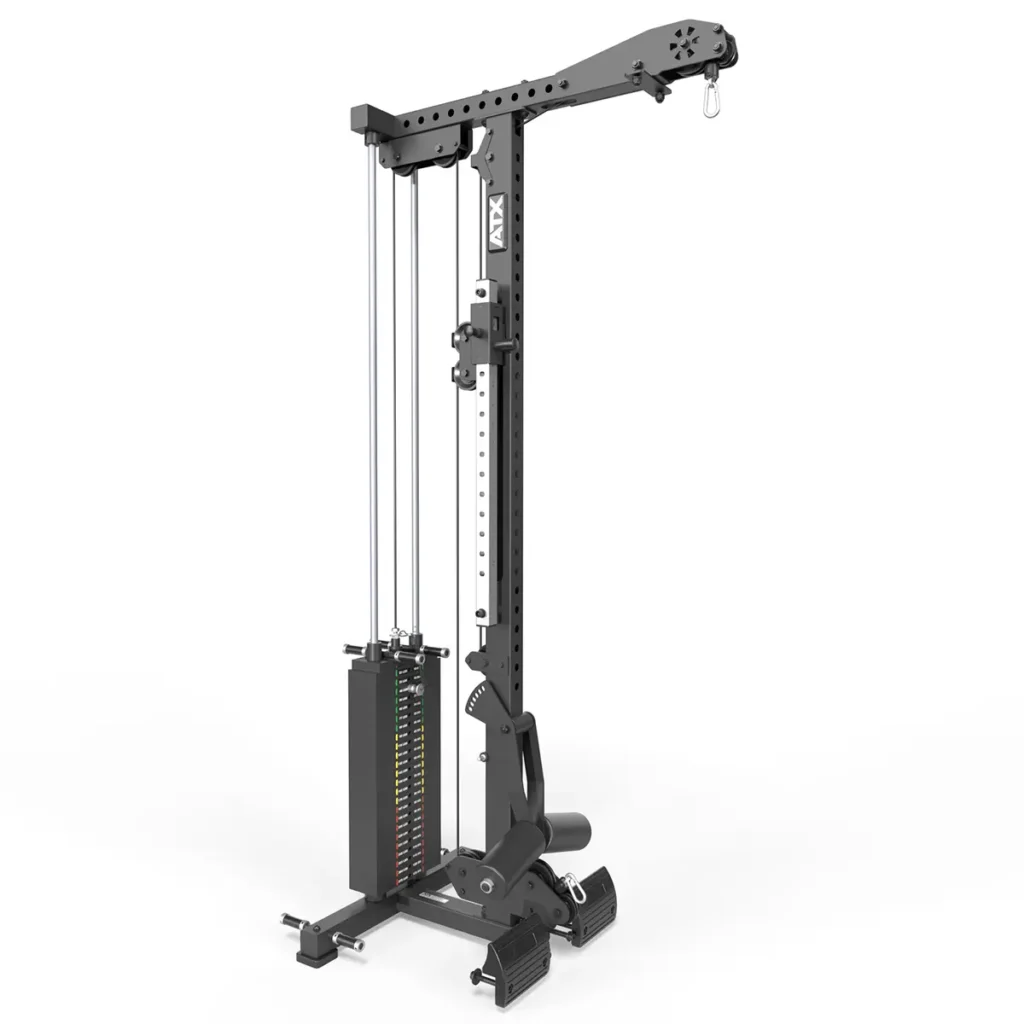
If you already have a power rack, you do not need a separate cable machine to get lat pulldowns and rows. A rack-mounted lat option bolts onto the back of the cage, uses no extra floor space beyond the tower itself, and costs a fraction of a standalone machine. It is the simplest home gym pulley system if you already own a rack.
Every current ATX® PRX power rack has a matching lat option in plate-loaded or weight-stack form.
Add On Lat Cable Machines
-
ATX® Lat Option 780 Plate Loaded
$1,095.00 -
ATX® Lat Option 660 115kg Weight Stack
$1,595.00 -
ATX® Lat Option 660 Plate Loaded
$895.00 -
ATX Lat Option 520 100kg Stack
$1,425.00 -
ATX® Lat Option 520 215cm
$445.00 -
ATX® Lat Option 780 125kg SW
$1,995.00
Cable Attachments Worth Buying First
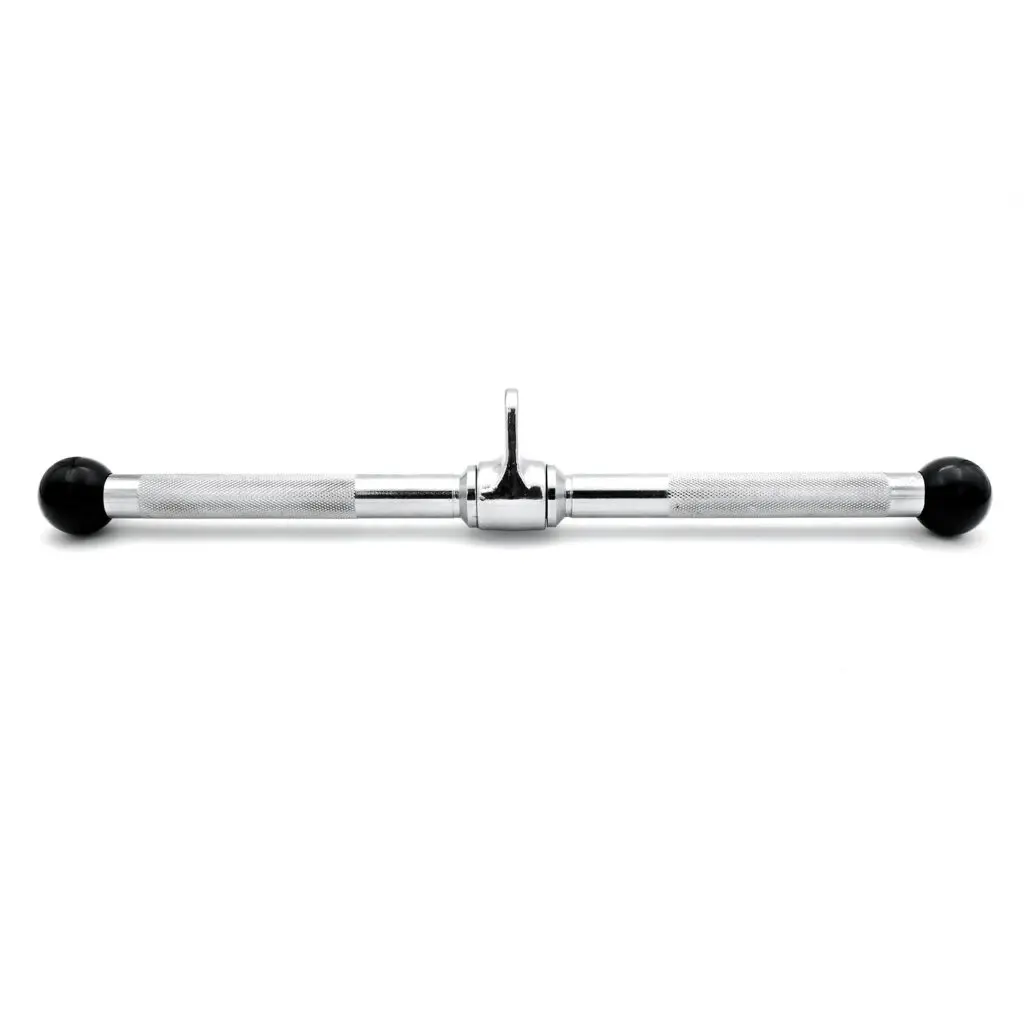
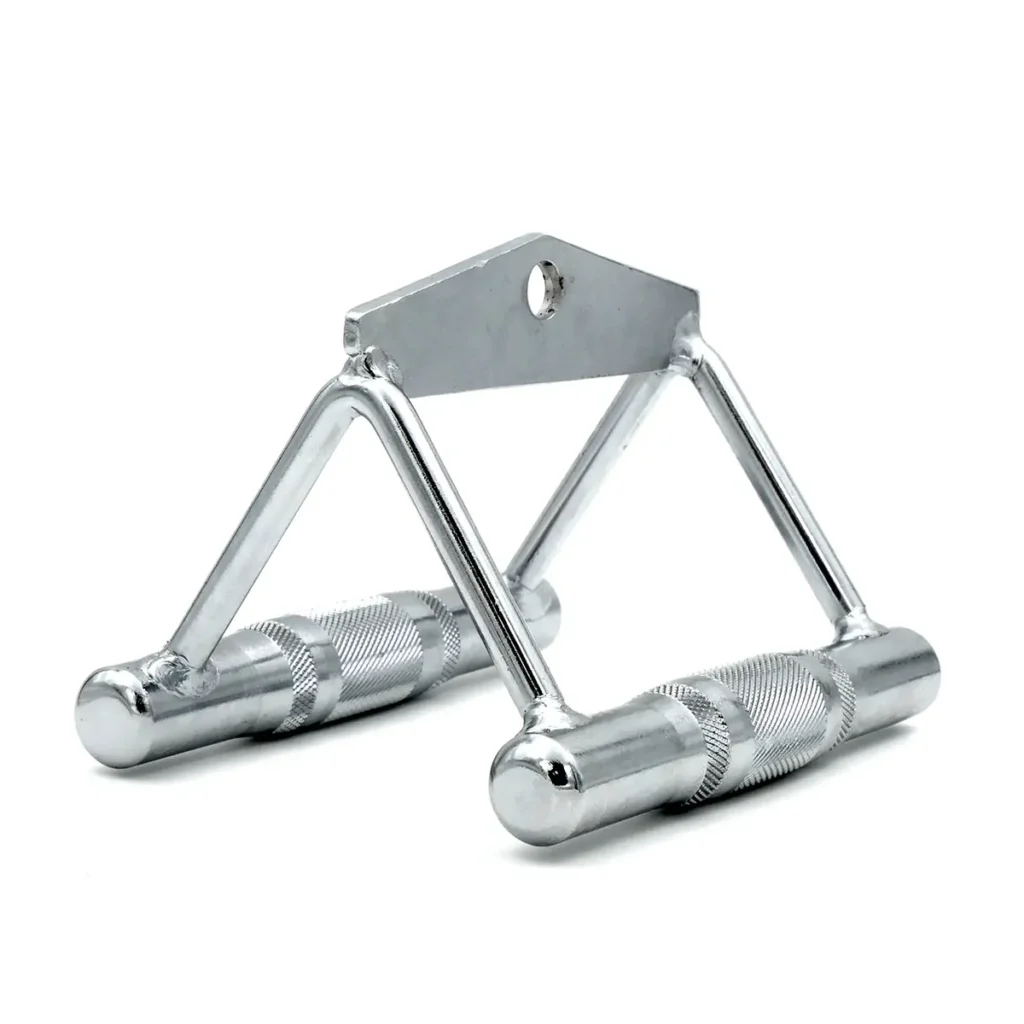
Some ATX® cable machines come with stirrup handles, and several include a triceps rope and ankle cuff. However others are sold without. Cable attachments are relatively cheap but are extremely useful. Even if they are not included, you can pick the ones you use for most.
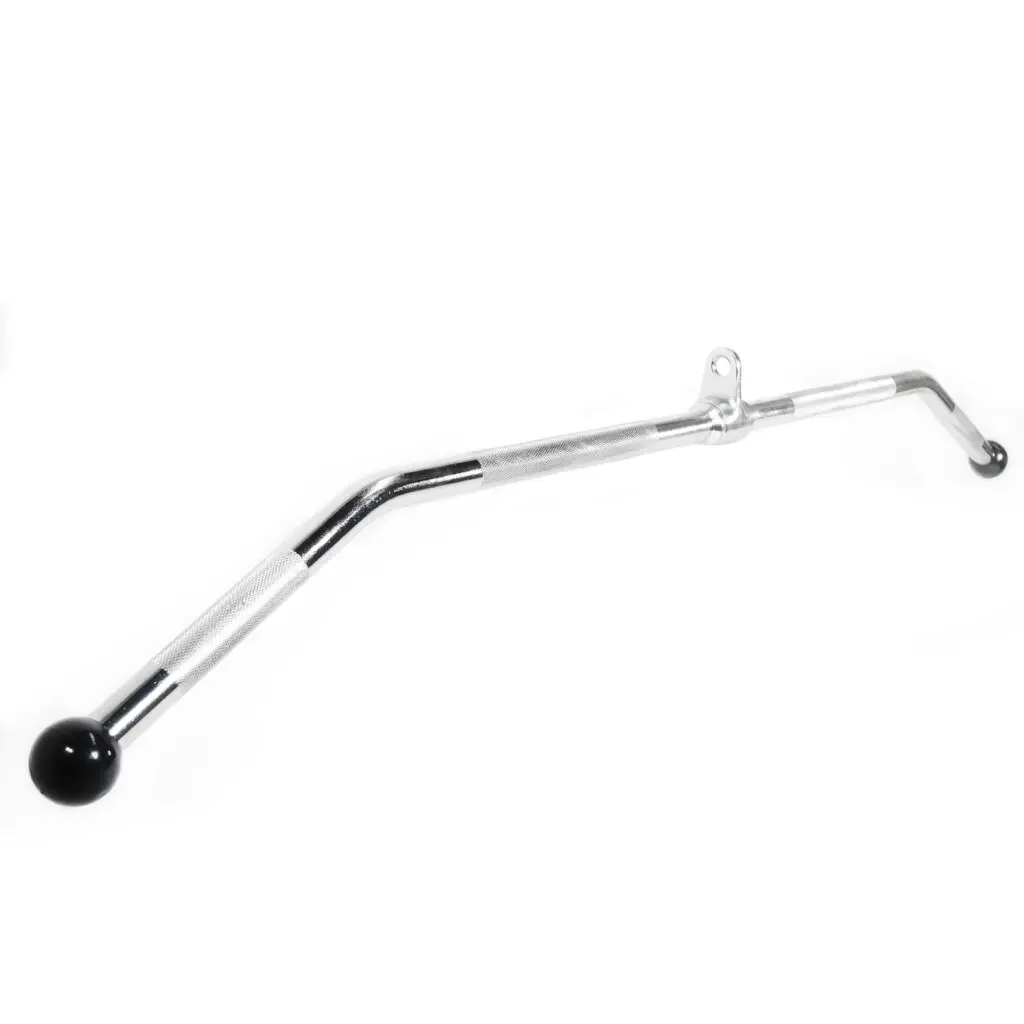
If you are on a budget my suggestions for your initial cable attachments are simple – close grip row handle, lat pulldown bar (get the wide one if you are tall), revolving straight bar and tricep rope.
Cable Attachment Starter Kit
-
Wide Lat Pulldown Bar
$47.00 -
Revolving Straight Bar
$23.00 -
Close Grip Cable Row Handle
$23.00 -
Tricep Rope Attachment
$13.00

Sam’s Picks by Budget and Space
The older I get, the more I appreciate a good cable machine. I would love to be lifting heavy, but my old body is not always up for it. So a light session on a cable machine gives me a pump without the joint pain. Plus they are great isolation work – face pulls are great to offset a day staring at the computer.
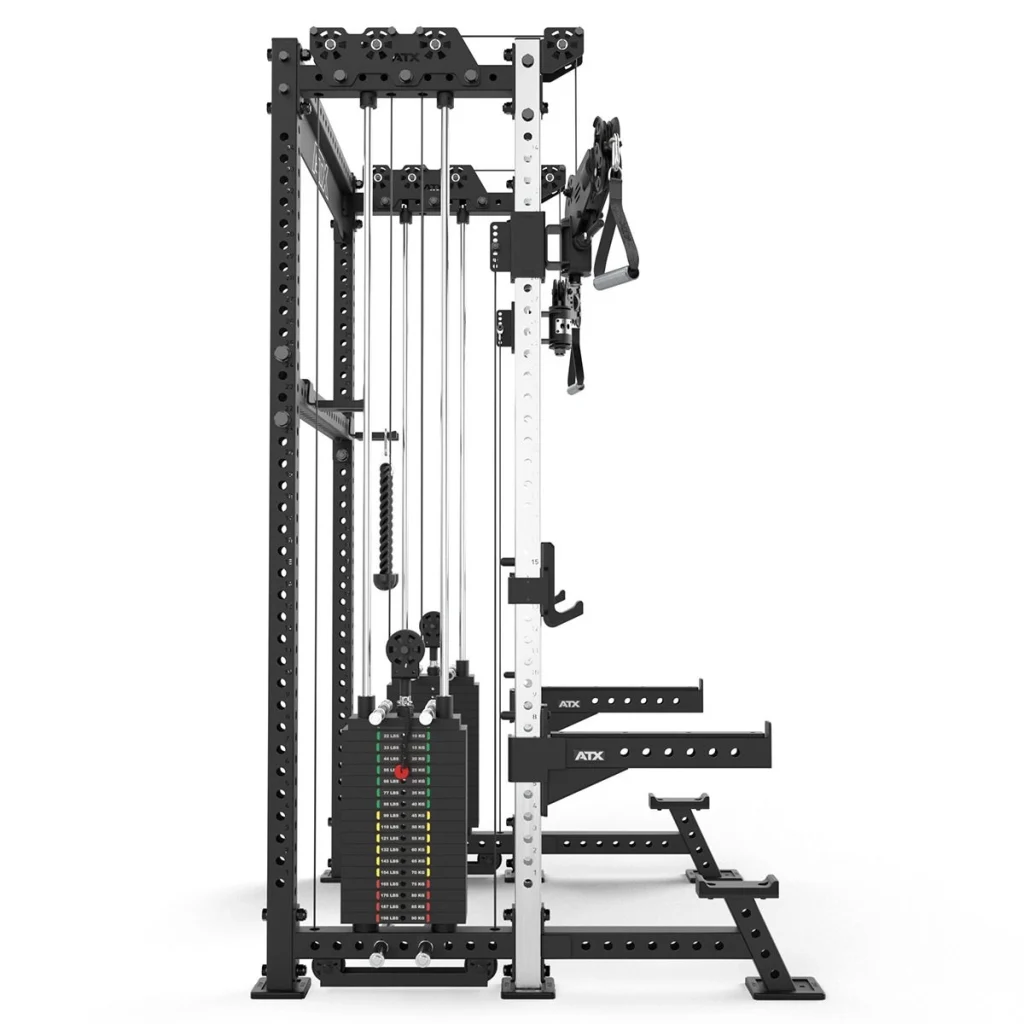
Even if I did have the money and space, I still might get a single stack machine. Either of the ATX machines would do the trick. Both machines allow you to do two handed exercises. It is not as good as a dual stack, put pretty close.
However I love doing cable work single handed. No rest between sets. I need to burn extra calories so I can have some tasty food and maybe a beer!
If I were in the market for a dual stack machine or functional trainer, I would probably get a 600 series all in one machine. Being a tight ass, they are not only cheaper, but you can use them as a half rack as well!
Seriously though, they are way better than many functional trainers on the market. You have the 2:1 ratio making them perfect for inexperienced users, isolation and rehab work.
If you were tight on space, you can even mount them to your wall!
Frequently Asked Questions
If I were in the market for a dual stack machine or functional trainer, I would probably get a 600 series all in one machine.
Both have two independent cables. A functional trainer is a compact, freestanding unit with adjustable pulleys close together, so it fits in about 1.6 x 1.1 m. A cable crossover machine has two towers set wide apart – up to 2.8 m – which gives a wider arc for chest flyes but needs much more wall space.
For almost everyone, yes. On a 2:1 machine, 90 kg gives you up to 45 kg per hand, and because cables keep tension through a longer range, that is harder than it sounds. Someone who benches 100 kg might manage around 35 kg on a cable press.
You feel half the weight on the stack: pin 50 kg and you pull about 25 kg. In return, the cable travels twice as far, which allows full-range movements and finer weight steps. On a 1:1 machine you feel the full stack, which suits heavy pulldowns and rows.
Yes, if your rack has a matching lat option.