Barbells
Showing 61–61 of 61 results

Showing 61–61 of 61 results
A barbell is the most fundamental piece of strength equipment you can own. Whether you’re pushing a heavy bench press, grinding through deadlifts, squatting, rowing, or curling — the barbell is involved. That’s why getting the right one matters.
While there are many pieces of highly functional gym equipment, what makes the barbell stand out is the quality of the workout you’ll get. Given their cost in relation to the functionality they offer, a barbell is one of the best investments you can make for your gym. They are also very easy to store when not in use, making them a must-have for even the most compact gym.
Key Benefits of Barbells:
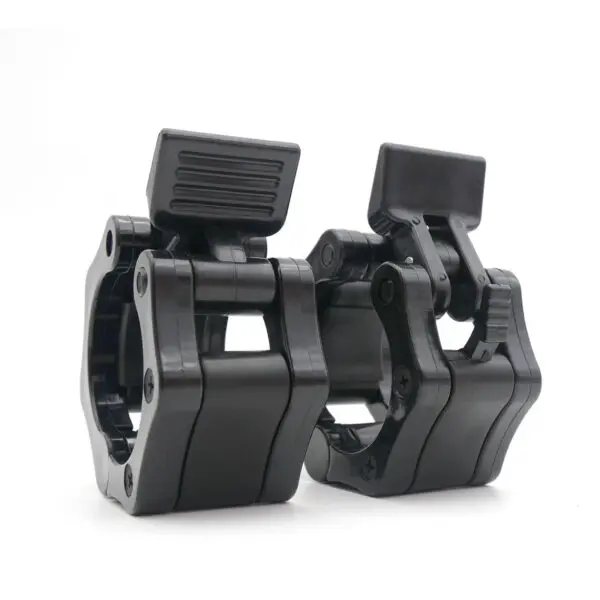
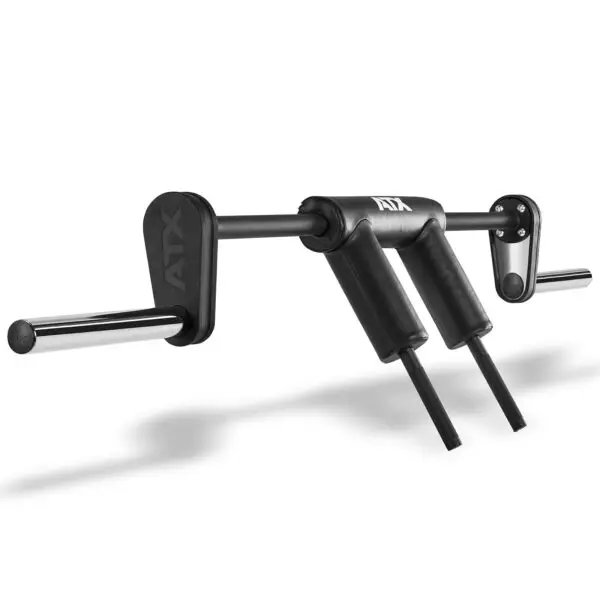
At Sam’s Fitness we stock Olympic barbells, Elite Olympic bars, specialty bars, EZ bars, trap bars, standard barbells, bar collars, and barbell storage. Whether you’re building a home gym from scratch or kitting out a commercial facility, there’s a bar here that will outlast your programming.
The barbell is probably the most recognisable piece of strength equipment by the general public, especially given their use in Olympic weight lifting. They’re found in all commercial gyms as they’re used for a wide variety of exercises. This is the reason why I believe they are so important and why I could train with just a barbell, forever!
A barbell is ideal for compound exercises like the bench press, squats, deadlifts, and rows. Compound exercises involve movements that require the activation of multiple muscle groups to stimulate strength and muscle gains.
Not sure where to start? These three cover most lifters.
The go-to for serious trainers who don’t need to spend big to get something built to last. Solid 30mm steel shaft, copper bushings for smooth sleeve rotation, consistent knurling, chrome finish. Sam’s has supplied these across Australia to gyms and personal trainers for years — they’ve earned their reputation as budget barbells that genuinely take a beating. Suitable for power cages and squat racks. Note: bar collars sold separately.
Best for: Home gym lifters, general strength training, powerlifting basics.
The ATX Ram was built to give serious lifters a genuine alternative to overpriced US-made power bars — independently laboratory tested on every production batch for compliance. 206,000 PSI tensile strength. 28.5mm spring steel shaft. Smooth rotation on precision brass bushings. Chrome sleeves with anti-slip ribbing. 700kg load capacity. Medium-sharp knurling that locks in your grip without shredding your hands.
Best for: Powerlifters, competitive athletes, serious home gym setups.
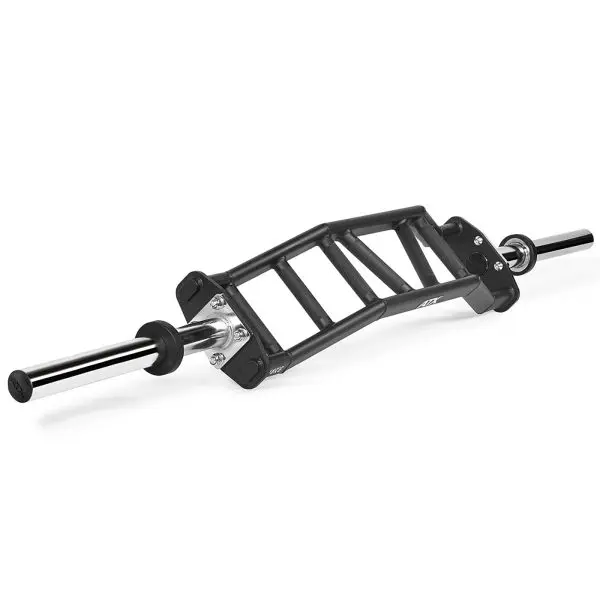
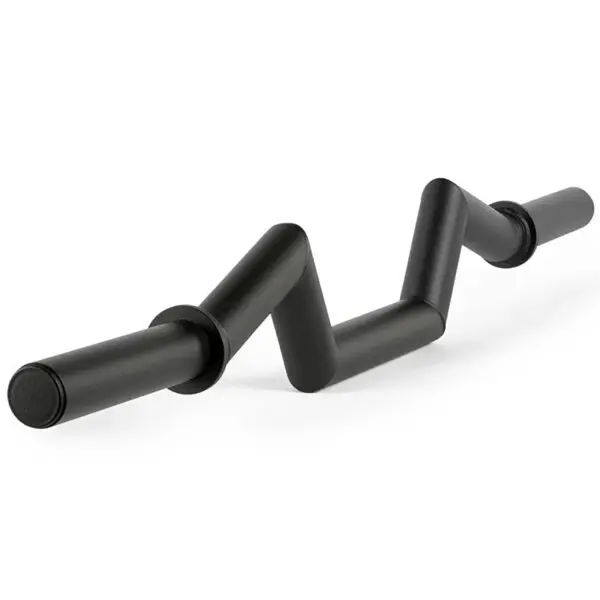
the Super Curl Bar has steeper angles than a standard EZ curl bar, letting you target different areas of the biceps and triceps. The grip sits roughly halfway between an EZ curl bar and a hammer curl bar. Commercial solid steel shaft, copper bushings, multiple grip positions, chrome finish. Particularly good for anyone dealing with wrist or elbow discomfort on straight-bar curls or tricep work.
Best for: Arm training, wrist-friendly curls, tricep extensions, forearm work.
The most common barbell is the straight bar — the one used in Olympic weightlifting and powerlifting. Olympic barbells are 7ft long with extra-long sleeves designed to load Olympic weight plates, which have 50mm diameter holes. Standard barbells are shorter with 30mm holes and designed for standard plates.
Unless you already own a lot of standard plates, go Olympic. The range of compatible equipment, weights, and accessories is vastly larger, and the quality ceiling is much higher. The Australian market has well and truly moved this way too — standard plates were common years ago, but they’re becoming harder to find. Straight bars range from 7ft down to 4ft.
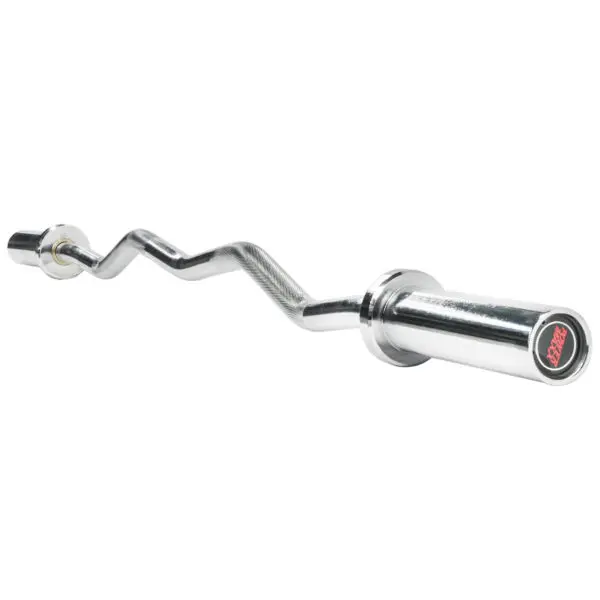
The EZ bar is a short, angled bar with W-shaped bends along the grip section. Those bends exist to take pressure off your wrists during bicep curls and tricep extensions — hence the name. For anyone who gets wrist or elbow discomfort doing straight-bar curls, the EZ bar is the fix.
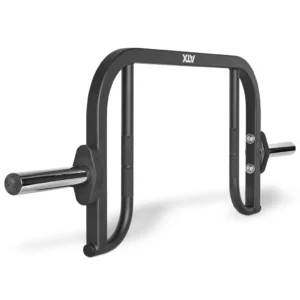
The trap bar is a hexagonal frame you stand inside. It was designed to shift the load from the front of your body to the centre during deadlifts — the bar sleeves sit at the ends of the hex structure, so the weight tracks closer to your centre of gravity. The result: you can lift heavier, with less spinal loading. Trap bar deadlifts are now used by everyone from beginners to elite athletes.
The other way you can classify barbells is by the sleeve diameter. Olympic bars are designed for Olympic weight plates. These have 50mm diameter internal holes. The other type is standard barbells which are designed for standard plates. These have 30mm holes.
Unless you already have loads of standard weight plates, I would strongly advise getting an Olympic barbell. Although they are a little more expensive, they do weigh more – so you will require less weight plates. This will partially offset the initial cost.
Most importantly, there is far more variety in the range of Olympic barbells, weight plates and gym equipment. Plus, the quality is generally better. Standard plates were very common in Australia years ago, but the industry has well and truly moved to Olympic.
Your choice of barbell is made easy. If you are looking for a basic, quality and durable barbell then look no further than the Power Maxx range of barbells. Although the price we sell them for is very competitive, these are not cheap barbells in terms of quality. There are many gyms in Australia that have these bars as their durability comes in a price that is second to none.
Their spring steel shafts stand up to heavy training. The solid steel sleeves (as opposed to cast ones on cheaper bars) rotate on either copper bushings or bearings. The sleeves need to rotate on dynamic lifts to reduce the strain on your wrists and provide stability. Either sleeve rotation method utilised by the Power Maxx range has been proven to stand up to heavy training for years.
My trusty Power Maxx copper bushed Olympic bar has proven to be a workhorse for me for years so I can give them no better recommendation than this.
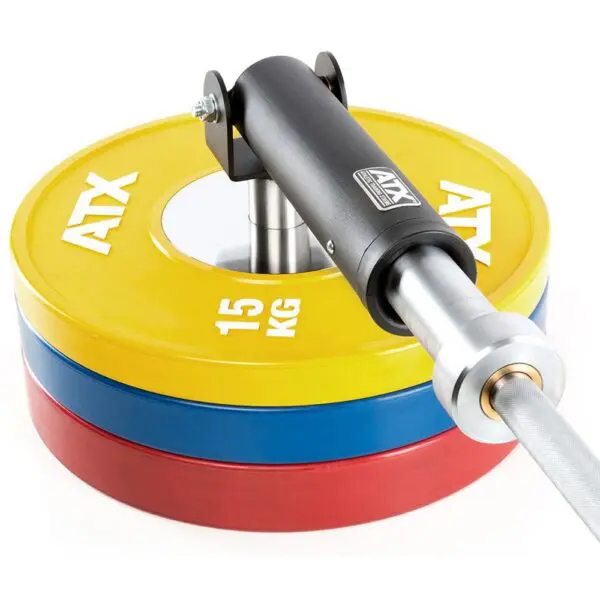
For those of you who compete in strength sports or take your training very seriously and don’t mind spoiling yourself, we have the ATX range of bars from Germany. They have taken the European market by storm.
Whether you are into power lifting, Olympic weightlifting, CrossFit or just a gym rat, you can choose one of their specialty 7ft barbells.
A barbell is the best investment a home gym can make. They store vertically on a dedicated barbell storage rack — compact, out of the way, and immediately accessible. The number of exercises a single bar unlocks is remarkable: bench press, overhead press, barbell squat, Romanian deadlift, bent-over row, barbell curl, hip thrust, shrug, upright row — that list doesn’t end.
If you’re building a home gym on a budget, a quality Olympic barbell, a set of weight plates, and a rack or bench is genuinely all you need. The barbell makes the rest possible.