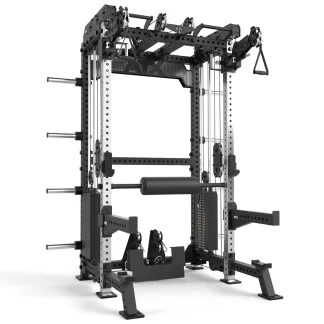
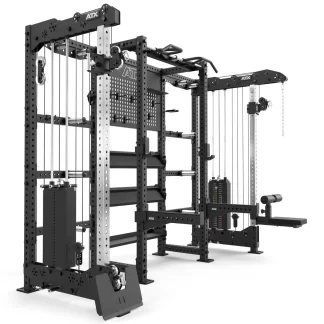
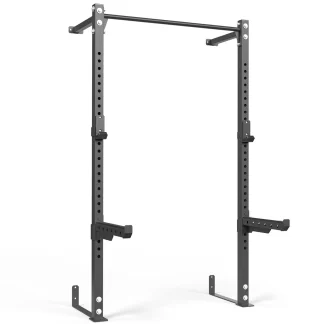
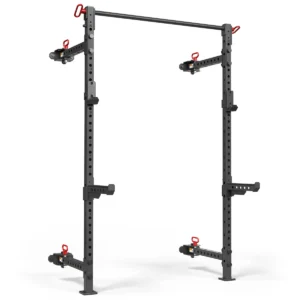
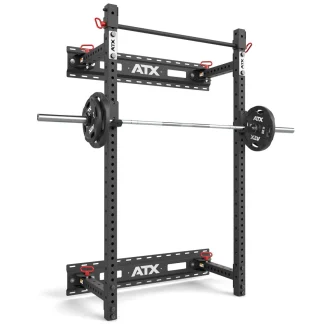
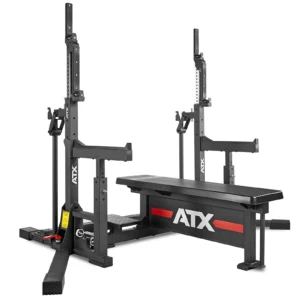
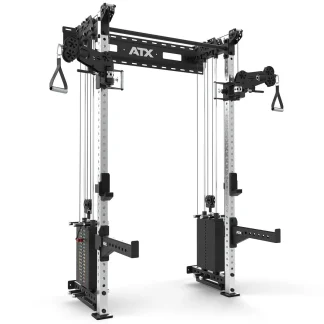
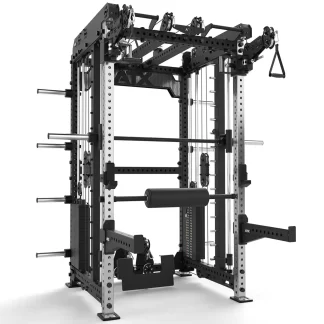
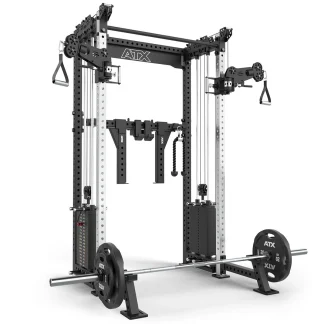
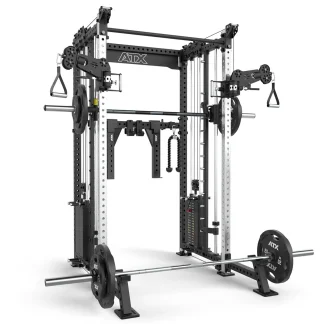
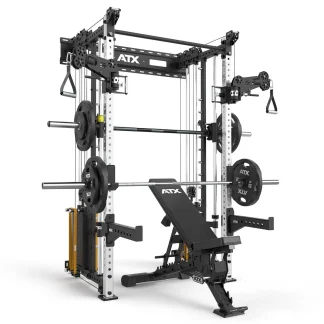
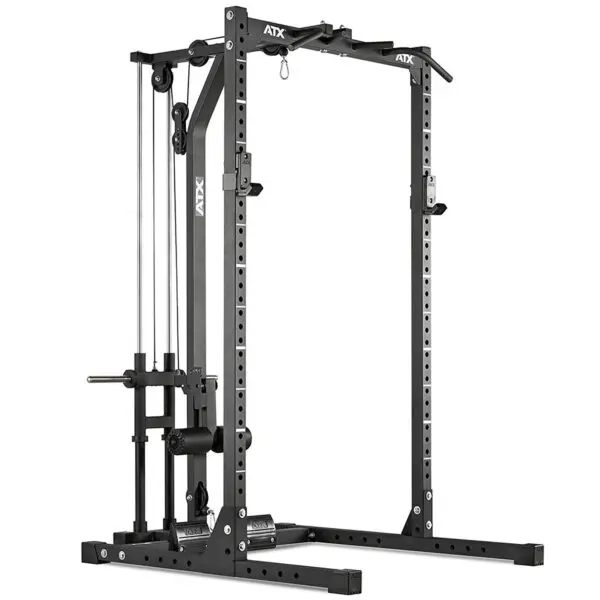
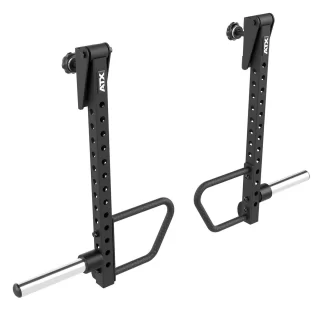
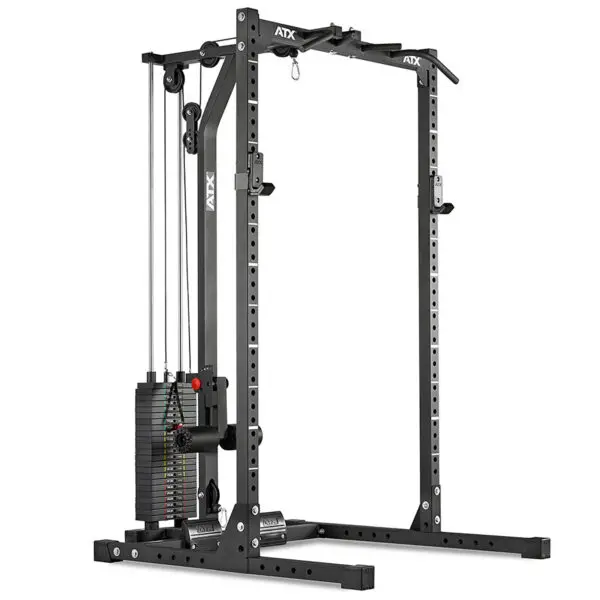
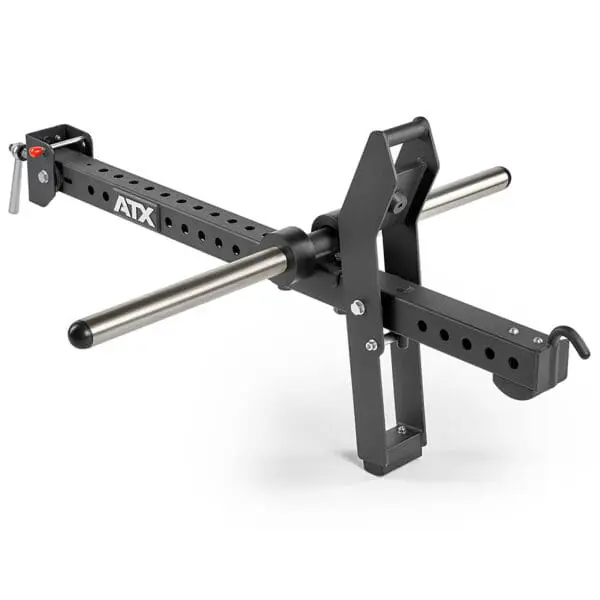
The compact, space-saving yet genuinely versatile alternative for your home gym.
Squat racks and half racks are effective powerlifting and strength training stations that work similarly to a power rack. Instead of four uprights, they have two — typically bridged at the top with a cross member that nearly always features a chin-up bar. This not only adds a tremendous amount of functionality, it makes the setup a lot more solid, which is critical when performing squats, bench press, overhead press, and rack pulls under heavy load.
Benefits
Compact footprint
Heavy duty construction
For beginners & advanced trainers
Safety mechanisms
High functionality
Half Racks, Squat Racks & Stands — The Compact Alternative for Your Home Gym
Squat racks and half racks are effective powerlifting and strength training stations that work similarly to a power rack. Instead of four uprights, they have two — typically bridged at the top with a cross member that nearly always features a chin-up bar. This not only adds a tremendous amount of functionality, it makes the setup a lot more solid, which is critical when performing squats, bench press, overhead press, and rack pulls under heavy load.
Generally, the first recommendation for anyone looking to set up a free-weight training home gym is to go for a power rack. However, for many people — especially those living in major cities like Sydney, Melbourne, and Brisbane where space is at a premium and house prices are through the roof — both squat racks and squat stands are ideal because they take up considerably less space.
The other factor is cost. Both squat racks and squat stands are cheaper than power racks. A quality half rack starts at around the same price point as a budget power rack, but gives you significantly more floor space back in your garage or spare room.
Squat racks and squat stands were primarily designed for racking and unracking squats. So it is actually quite common for people to refer to a power rack as a squat rack, since it too was designed primarily for squatting. However, the term “squat rack” is more appropriate for the half rack or half cage — which is exactly what this page covers. If you are after a full four-post cage, head over to our power racks category.
Half Rack vs Full Power Rack — Which One Do You Need?
This is the question that comes up the most. Here is the honest comparison:
Feature
Half Rack / Squat Rack
Full Power Rack
Uprights
2 (bridged with cross member)
4 (fully enclosed cage)
Training Position
You train outside / in front of the rack
You train inside the cage
Footprint
Compact — ideal for garages & spare rooms
Larger — needs dedicated space
Safety System
Spotter arms (open-sided)
Full spotter bars (front to back)
Price
More affordable entry point
Higher cost, more built-in features
Pull-Up Bar
Standard on most models
Standard on most models
Lat Tower / Cables
Available on select models
More commonly integrated
Blackout Safety
Spotter arms catch at front only
Full cage contains bar in all directions
Best For
Home gyms, space-conscious setups
Serious lifters, commercial use
The notable difference is that a power rack is designed for you to train inside it, whereas a half rack is designed for you to train outside of it. Power racks offer a slight safety edge because the full cage contains the barbell in every direction — including if you pass out and fall backwards during a heavy squat. With spotter arms on a half rack, there is nothing stopping the bar if you go backwards. While this is rare, it is one reason some lifters prefer to pay more for a full cage.
That said, if you use the spotter arms correctly on a half rack, you can train safely with no issues. And for anyone who does Olympic lifting or jerks, a half rack is actually preferable — it is far easier to dump the weight rather than trying to set it on spotter bars inside a cage. For a deeper comparison, check out our Squat Rack vs Power Rack article.
The Best Squat Racks in Australia
In my highly biased opinion, I believe we stock the best squat racks and half racks in Australia. The ATX® lineup is German-engineered with a focus on structural integrity that you can see and feel. Get the measurements wrong on a half rack design and it will tip when you rack the barbell. Overlook the bracing and it shakes like a metronome. The German engineers take their time to get this right — thick-walled steel, high-tensile hardware, reinforced upright brackets, and rubber feet as standard across the range.
Frequently Asked Questions
Are Squat Stands safe?
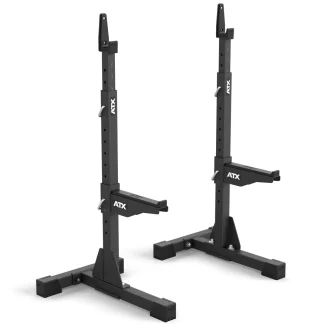
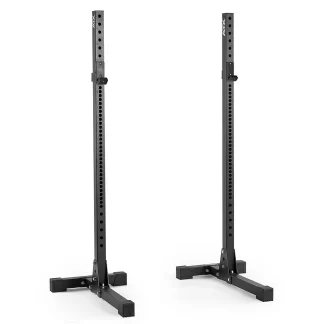
Squat stands are safe when they are built from quality materials, properly weighted down, and used correctly. Look for stands with wide base feet, plate-loading pegs for added stability, and a minimum load rating that exceeds your working weight by at least 50%. If your squat stands do not have safety spotter arms, strongly avoid training alone — especially for bench press. The ATX-SQS-650 features adjustable spotter arms and an optional connecting brace for added stability. When used correctly, they are just as safe as any half rack.
Can you use Squat Stands for Bench Press?
Yes. Squat racks with adjustable j-hooks allow you to set the bar at the correct unracking height for flat, incline, and close-grip bench press. Most half racks also include safety spotter arms that catch the bar if you fail a rep. For squat stands, both the j-hooks and spotter arms need to be adjustable, and the stands must be set wide enough apart to roll a bench in and out. A spotter is strongly recommended if your squat stands are lightweight or lack spotter arms.
Are Half Racks safe?
Half racks are safe, when used correctly. Probably not quite as safe as a full rack, but they do have their advantages. The footprint on half racks is usually a lot smaller than a full power rack. They will also tend to be a little less expensive as well.
Some of the downsides of a half rack are they are usually a little less stable due to only having the 2 uprights. They also might not be able to handle as much weight as a full rack. To ensure the half rack can be as safe as can be, make sure you always use the spotter arms.
As a rule, if you have good quality gym equipment and you are using it as it is designed you are safe. The main cause of weight training injuries and incidents is from people doing dumb things – like trying to lift too much weight.
Do Half Racks need to be Bolted Down?
Some half racks need to be bolted down while others do not. This is where it is important to buy a good quality half rack manufactured by a reputable company. Due to their more compact nature, a poorly designed half rack that is not bolted down could be dangerous.
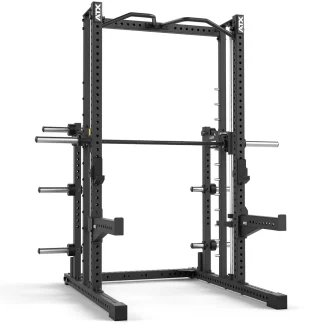
The base model ATX-HRX-620 half rack does not need to be bolted down. It’s height, depth and design have all been engineered so that it can be used sitting on its custom rubber feet – no bolting required. The spotter arms are also designed so that they will not becoming a tipping hazard.
How to Squat in a Half Rack?
Set the j-hooks at collarbone height so you can step in and unrack the bar comfortably. Position the safety spotter arms just below your lowest squat depth — roughly 2–5 cm below parallel. Step back, set your feet shoulder-width apart, brace your core, and squat.
The open-front design of a half rack gives you full freedom to walk the bar out and adjust your stance without bumping into cage uprights.
This is why some Olympic weightlifters prefer half racks — it is easier to dump the weight forward rather than trying to set it on spotter bars inside a cage.
How to use a Half Rack?
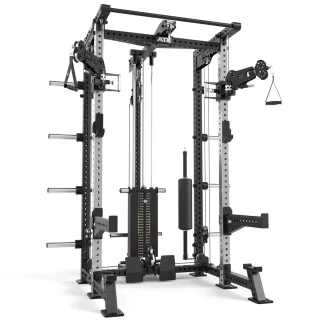
A half rack supports squats, bench press, overhead press, barbell rows, rack pulls, and pull-ups as standard exercises. Set the j-hooks and safety arms at the appropriate height for each exercise. For rack pulls and pin presses, set the safeties at your desired starting position and lift directly off them. If your half rack has a lat tower attachment, you can also perform lat pulldowns, cable rows, seated rows, and tricep pushdowns — effectively making it a complete training station.
What Is the Difference Between a Squat Rack and a Power Rack?
A squat rack (half rack) has two uprights connected by a top cross member with a pull-up bar. You train outside or in front of the rack. A power rack (full cage) has four uprights forming an enclosed structure, and you train inside it. The practical difference is safety: power racks have full spotter bars running front-to-back that contain the barbell in every direction.
Half racks use spotter arms that only catch at the front. Half racks take up less floor space, cost less, and are preferred by Olympic lifters who need to dump weight. Power racks are preferred by powerlifters and anyone who wants maximum safety during solo training.
What Size Squat Rack Do I Need?
For most home gym users, a half rack with an internal j-hook width of 1,100–1,220 mm (standard Olympic barbell spacing) and a height of at least 2,100 mm is ideal. Check your ceiling height before buying — domestic ceilings in Australia average 230–250 cm, and most domestic half racks sit between 210–220 cm. If ceiling height is tight, look for wall-mounted or folding options. Floor footprint for a standard half rack is roughly 1,200 mm deep by 1,300 mm wide, significantly smaller than a full power rack.