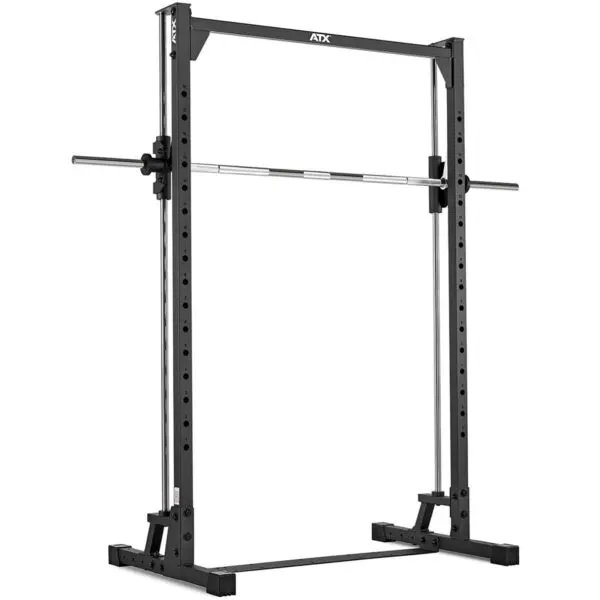
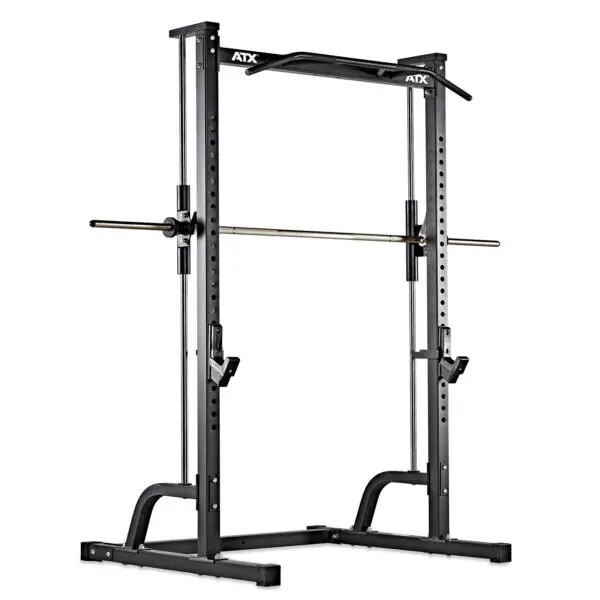
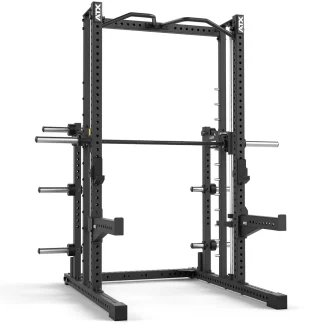
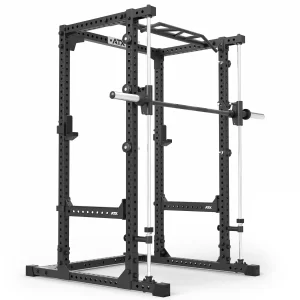
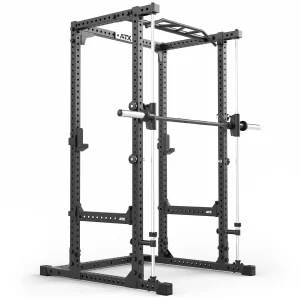
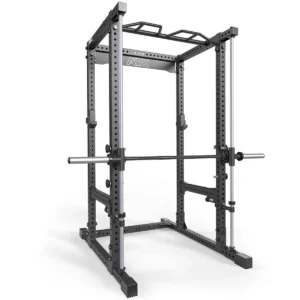
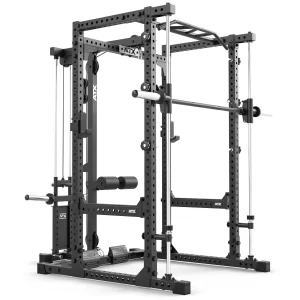
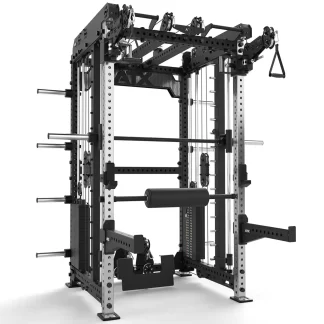
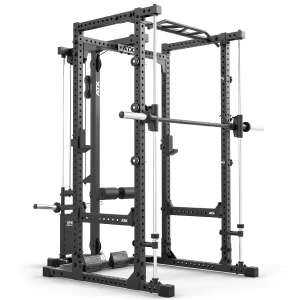
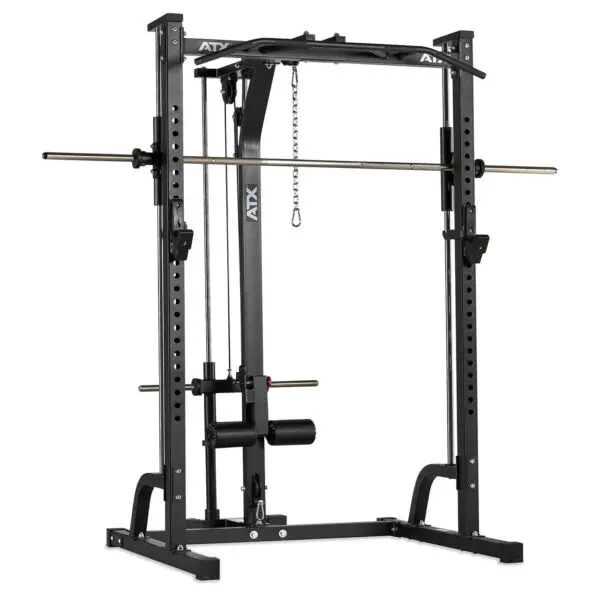
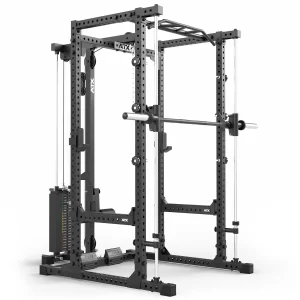
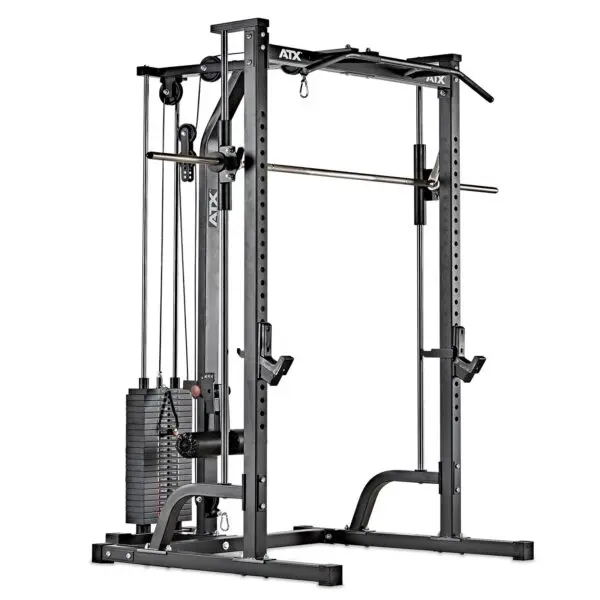
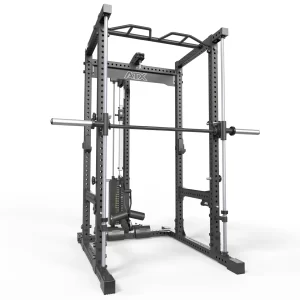
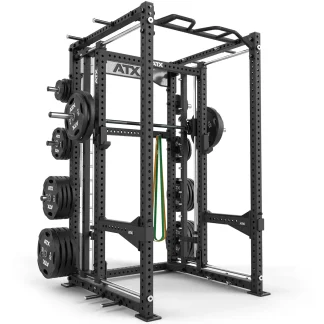
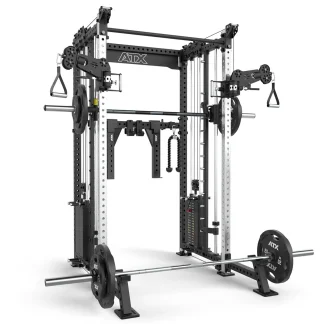
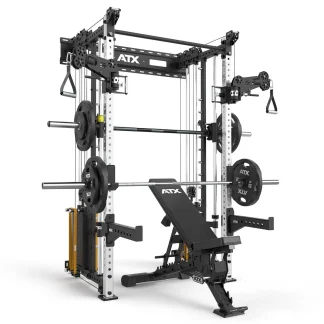
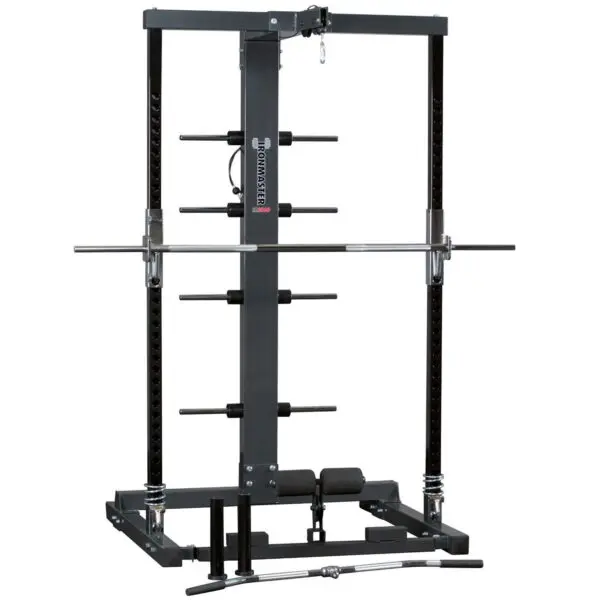
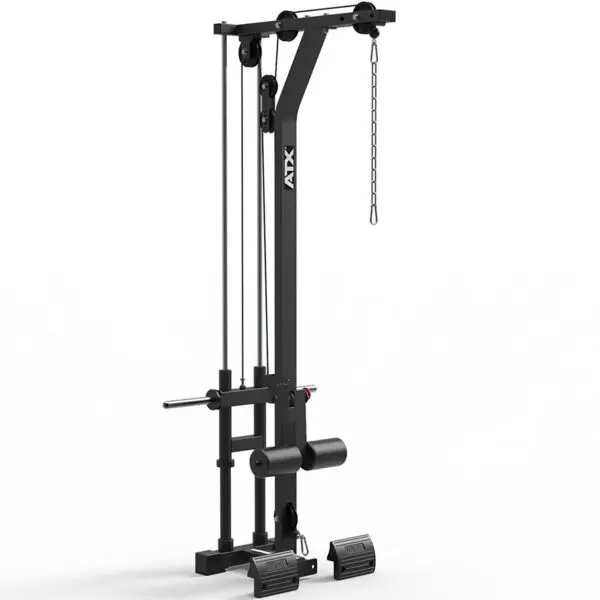
A smith machine is a guided barbell training system that lets you perform squats, bench press, shoulder press, hip thrusts, deadlifts, and other compound movements with a fixed bar path. Unlike a free barbell, the bar is attached to vertical or angled rails, so you can train safely without a spotter — making a smith machine for home your gym one of the most practical investments you can make in your training setup.
Benefits
Heavy-duty steel construction
Multi-functional — squat, press, deadlift & more
Suitable for home gym & commercial use
High functionality
Safety mechanisms
What to Look for in a Smith Machine
Not all smith machines are built the same. The most important spec to check first is the smith machine bar weight. Standard bars typically weigh between 6–20 kg, but many models use a counterbalanced bar that feels lighter than a traditional Olympic barbell — useful if you’re training around an injury or introducing beginners to barbell movements.
Next, consider the rail angle. Vertical rails keep the bar path straight up and down; angled rails (usually 7–12°) mimic a more natural pressing motion. Both are effective — the right choice depends on your primary exercises. If squatting is your focus, an angled rail is generally preferred.
Finally, decide whether you want a standalone unit or an integrated rack. Several models in our range combine a smith machine with cables, giving you access to lat pulldowns, cable rows, face pulls, and tricep pushdowns from a single piece of equipment — a significant space and cost saving for any home gym.
Smith Machine Exercises: What Can You Train?
A smith machine covers most major muscle groups. Here are the most common movements:
Smith machine Squats – the guided bar path makes it easier to focus on depth and quad drive without worrying about balance.
Bench Press – train chest without a spotter; ideal for home gym lifters training alone.
Shoulder Press – vertical pressing with a fixed path reduces shoulder joint stress for many lifters.
Hip Thrust – load the bar at a fixed height for consistent glute activation without a bench setup.
Lunges – split squat and lunge variations are easier to load progressively with the fixed bar.
Calf Raises – position the bar across your traps and perform standing calf raises with full load control.
Smith Machine vs Free Weights: Which Is Right for You?
Free weights recruit more stabiliser muscles because you’re responsible for controlling the bar path in three dimensions. A smith machine removes that variable – the bar moves on a fixed plane, which reduces stabiliser demand but allows you to overload the primary muscles with more weight and less technical risk.
For most home gym lifters, this is a practical advantage, not a drawback. If you’re training alone, pushing close to failure without a rack or spotter carries real injury risk with free weights. The smith machine’s safety catches eliminate that entirely. Many experienced lifters use both – free barbells for competition-specific movements, and the smith machine for hypertrophy work and accessory training.
Smith Machines for Home Gyms
We stock models suited to every budget — from compact, standalone smith machines starting under $900, through to commercial smith machines built for daily heavy use.
Smith Machine Comparison: Which Model Is Right for You?
Model / Type
Footprint
Integrated Cables
Commercial Certification
Lat Pulldown Option
Best for
ATX-MPX-500
123/189x86cm
✗
Domestic
✗
Compact gyms
ATX-MPX-620
121/203 x 111cm
✗
Domestic
✓
Smith & Half Rack combo
ATX-PRX-640-MPO
120/188 cm x 142 cm
✗
Domestic
✓
Lifters wanting rack + smith versatility
IM2000
185x125cm
✓
N/A
✗
Small Space, Full Body Workouts
ATX-SRX-650
157 cm x 120/199 cm
✓
Studio
✓
Home gym, full-body training
ATX-PSR-780
180 cm x 129.5 cm
✗
Studio
✗
Gyms, studios, daily heavy use
Frequently Asked Questions
What is a Smith machine and is it as good as a power rack?
A Smith machine is a barbell fixed in vertical guide rails — the bar only moves up and down, not freely. Pros: safer for solo lifters (you can re-rack mid-rep), forces a fixed bar path, great for isolation work. Cons: the fixed path doesn’t replicate real-life lifting, and core/stabiliser muscles don’t engage as much as on a free barbell. For pure muscle building: Smith is a useful tool. For strength and athletic carryover: free-weight power rack wins. Many serious home gyms have both.
Are Smith machines counter-balanced?
Some are and some aren’t. The ATX smith machines are not. Adding a counter balance system to a smith machine also adds significant cost. The lifting bar in most cases are 20kgs – the same as an Olympic Bar. So the majority of trainers do not need it. To reduce the weight of the lifting bar, it is just as easy to loop a resistance band over it and attach it to the cross member if possible.
Do Smith machines come with cables and lat pulldowns?
Some do, some don’t. The ATX Multi Smith Rack All in One combines a Smith machine with a full cable crossover and lat pulldown station — one of the most space-efficient home gyms available. The basic ATX Smith Machine Half Rack is just the Smith. If you want everything in one footprint: go for a Smith + cables combo. If you already have a separate cable station: save money on a basic Smith.
How much space does a Smith machine need?
A standalone Smith machine needs about 220cm × 180cm floor space and at least 220cm ceiling height (the bar needs to travel its full range). Smith + cable combinations need about 240cm × 200cm. Add 60cm in front for the bench and 60cm behind for cable rows. Tight ceilings (under 220cm) won’t accommodate a standard Smith — call us to discuss low-ceiling options.
Are Smith machines safe for beginners?
Yes — arguably safer than free weights for solo beginners. The fixed bar path and easy re-rack mean you can train heavy alone without a spotter. Use it to learn the movement patterns of squats, bench, and overhead press before transitioning to a power rack. The catch: don’t stay on the Smith forever — once you’re confident with form, free-weight training builds more functional strength and stabiliser muscle.
What exercises can you do on a Smith machine?
A smith machine supports a wide range of exercises: squats, lunges, and calf raises for legs; bench press, incline press, and chest press for chest; shoulder press and upright rows for shoulders; hip thrusts and Romanian deadlifts for glutes and hamstrings; and bent-over rows for back. On cable-integrated models, you can also perform lat pulldowns, cable rows, face pulls, and tricep pushdowns.
How much does a Smith machine bar weigh?
Smith machine bars typically weigh between 6 kg and 20 kg depending on the model. Many home gym smith machines use a counterbalanced bar — a spring or weight mechanism offsets part of the bar’s mass, making it feel lighter than a standard 20 kg Olympic barbell. This is especially useful for beginners or rehab training. Always check the product specifications for the exact bar weight of the model you’re looking at, as this varies significantly between manufacturers.
Can you bench press on a Smith machine?
Yes. Set a flat or adjustable bench under the bar, position yourself so the bar path tracks over your mid-chest, and use the safety hooks to rack the bar at the end of each set. Because the bar is guided, you can train to near-failure without a spotter — making it well suited to solo home gym training.